Well-Intentioned but…

Oregon State Legislature sent this bulletin Wednesday, November 22, 2017 by devadmin

Just before leaving Oregon for Bonn, Germany and the UN Framework Convention on Climate Change (UNFCCC), Governor Kate Brown issued a couple of Executive Orders which she claimed would, “drive the state’s efforts forward in reducing greenhouse gas emissions.”

The governor’s first executive order, would require new homes built after September 2020 be equipped and ready for solar panel installation. Commercial buildings must meet the same mandate by October 2022. Additionally, by October 2022, all parking structures for new homes (this means your garage or car port) and commercial buildings must be wired for at least one electric vehicle charger.

Then, by October 2023, Gov. Brown directed the state’s Building Codes Division to require all new homes to be “zero-energy ready.”

Wow … How will this impact new home prices in a state where our “affordable housing” fuel gauge already reads, “Empty.”

These are two excellent examples of seemingly well-intentioned Executive Orders that actually harm poor, under-privileged and middle-class households while squandering valuable resources at the same time.

These building requirements impact all new construction not just new construction in prime solar gain environments. Every new home, even those shaded by tall, near-by buildings, tall evergreens, or situated on north-facing slopes will be required to purchase and install features that will never be utilized.

For the countless other homes with moderate solar gain potential, what percentage of those will utilize these “solar-ready” features? These mandates force substantial resource waste while harming a disproportionate number of poor and lower middle-class families by saddling them with associated direct costs that they cannot afford and will never use. Will Moms be forced to give up a year’s supply of bread and milk to buy a feature they’ll never use?

The Founding Fathers knew, that outside of its legitimate functions, government does nothing as well or as economically as the private sector of the economy. So, why don’t we allow voluntary, free-markets to work? To wit, if you are building a new home and want it to be “solar ready,” then make that choice, if not, then no one should force that decision on you. Why would the Governor want to force someone to buy something they don’t want or need?  This reminds me of Obama’s healthcare requirement that all males purchase maternity and prenatal health insurance even though they will never need or use this coverage.

It appears Gov. Brown’s policy interventions were made without considering the unintentional waste stemming from the one-size fits all standard. Additionally, this policy neglects simple things like possible technological innovations and market supply/demand constraints.

Meanwhile, the agencies tasked with implementing these policies will be ever diligent in doing their best to follow the rules. This becomes a situation where bureaucrats are hard at work following the flowchart and checking the boxes to ensure that they adhered to the letter of the Executive Order. All the while, the ill-defined terms of this executive mandate will lead to practical implementation problems via obtuse rules and opaque administrative procedures.

With regard to “driving the state’s efforts forward in reducing greenhouse gas emissions,” these two Executive Orders don’t really drive anything, anywhere. Rather, they will make new housing and construction more expensive, waste precious resources, and tighten existing housing markets which will adversely affect people lower on the socioeconomic scale.

As I mentioned earlier, these orders were announced just before the Governor left for the UN conference for climate initiatives in Germany.  Apparently, this was the point.

Unfortunately, the governor has fallen prey to empty sophistry and these executive efforts resemble meaningless rallying points for her gubernatorial campaign and for all  like-minded Democrats rebelling against President Trump’s withdrawal from the Paris climate accord.

Looking at news releases, the latest Bonn meetings didn’t accomplish much, either.
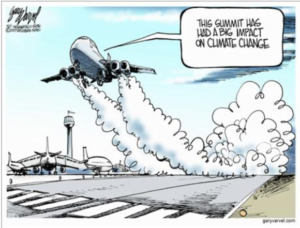
The greenhouse emissions from the eruption of Mount Agung, Bali weren’t addressed. Nor, were the forest fires that raged across the Western United States, or elsewhere on the planet. Additionally, the talks reported 273 gigawatts of worldwide coal capacity which is currently under construction, with another 570 gigawatts in planning stages. This would be a whopping 42 percent increase in global energy production from coal. This building boom will be necessary because the electric vehicle charging stations will have to be powered by coal, hydro or natural gas – solar power can’t meet the battery demand.

Besides, this year’s stated goal continues to be a target of keeping global temperature rise to well below 2-degree C, and 1.5-degree C if possible. This 2-degree global warming metric is the same 2-degrees that renewable energy cronies and government elites have bandied about for over 30 years.

In the US, it started with the Senate Environment and Public Works Committee hearings on June 10, 1986. The event featured testimony from numerous researchers, one of whom was James Hansen, a leading climate modeler with NASA.

In essence, Hansen, “predicted that global temperatures should be nearly 2 degrees higher in 20 years” and “the average U.S. temperature has risen from 1 to 2 degrees since 1958 and is predicted to increase an additional 3 or 4 degrees sometime between 2010 and 2020.”

Note, none of these predictions came to pass. Nor, is there substantial evidence that these conditions are imminent. Luckily, there is a nice escape hatch for being undeniably wrong.

The errors are explained away by, “the natural variability of the temperature in both real world and the model are sufficiently large that we can neither confirm nor refute the modeled greenhouse effect on the basis of current temperature trends.”

In other words, “We don’t know what we are talking about but we are here to save you; so, give us your money!”

Remember, if we don’t stand for rural Oregon values and common-sense, No one will.
Dennis Linthicum
Oregon State Senate 28

Citizen Heroes

Oregon State Legislature sent this bulletin Wednesday, November 8, 2017 by devadmin

This week we mourn alongside the community of Sutherland Springs, in Texas. This past Sunday, in a Baptist Church – 26 Christian men, women and children were senselessly murdered. My prayers are with those dealing with this horror and the loss of their loved ones, while my admonitions apply to everyone

A week earlier, we read stories of people randomly killed while on a popular bike-only path in lower Manhattan. The terrorist murderer drove a rented truck for nearly a mile down the path in the shadow of the World Trade Center, shouting, “Allahu Akbar.” In New York, the Islamic Terrorist was stopped by police as he was fleeing on foot.

However, in Texas, a brave, quick-thinking, law-abiding gun owner jumped up to save lives in his own neighborhood.

Stephen Willeford quickly rose grabbed his firearm and engaged the murderous assailant who was shooting and killing Christians while they attended a Sunday morning church.

Stephen Willeford, is not a police officer. He is not a Seal Team 6 member with advanced weapons training and skills. He is a plumber who knows how to shoot well enough to injure the killer, even though the fiend was wearing body armor.

When the killer fled the scene, at high speed, a second citizen, a rodeo bull-rider, named Johnnie Langendorf, picked up Willeford and the two of them gave chase.

These two average citizens kept the 911 dispatch officers informed as they hit speeds of 95 miles an hour.

Eventually, they directed deputies to the place where the killer had finally crashed his escape vehicle.

In a news interview, Johnnie stated that it was approximately 5 minutes before the police arrived on the scene. While awaiting the arrival of law-enforcement Willeford had his firearm trained on the killer until the police arrived.

Stephen & Johnnie are the heroes in this tragedy. These two citizen heroes saved lives, of that there can be no question.

But you know what else? — Stephen Willeford, the plumber, was also an NRA member.

He’s a card-carrying member of the NRA, while the murderer was not. Imagine that!?

So, a man who obtained a gun illegally and was not a member of the NRA attacked a church full of Christians and was stopped by an NRA trained citizen using his own personal firearm, for its legitimate purpose –– stopping evil.

This is the good-guy-with-a-gun scenario.

A trained, certified, legal gun owner intervening against a bad guy who illegally obtained a weapon he is not permitted, by gun laws, to have, or own.

It seems obvious that when a bad guy with a gun shows up the answer is always a good guy with a gun (whether that good guy is an officer of the law or a private citizen makes little difference.) The point is good guys with firearms are needed to stop bad guys with firearms.

Thankfully, two good guys showed up yesterday in Sutherland Springs.

The background check system (NICS) failed, because somewhere, somehow military records and court martial information never made it into the NICS. Even if the information had been placed into the NCIS in a timely and efficient manner, there is still no guarantee that some other avenue of illegal firearm trade wouldn’t have provided the means for the murderous ends that the perpetrator wished on these Christian Brethren.

Our 2nd Amendment rights must be protected and preserved to combat evil intentions. We must not make it harder for good people like Stephen Willeford to keep and bear arms.

Here in Oregon, we must be careful because the totalitarians in our midst will launch a full-scale gun control effort because of this tragic mass murder of 26 Americans who were enjoying church last Sunday.

In truth, our government ought to be encouraging every able-bodied citizen to not only own weapons, but be skilled and prepared in using them! In the old days, this was the case.

How many of you can remember attending classes for shooting sports on your high school campus? How many of you had your rifle or firearm in your car or hanging from the back window of your pick-up truck while you went to class?

Our American heritage as documented in our Constitution’s Second Amendment did not spring into existence from another galaxy. It has a long history, founded in natural law, experience and philosophy. Across the old and new worlds, the notion of an armed populace as a means of securing human freedom was well documented in historical fact and legal tradition.

Many of our nation’s Founders were well studied in legal tradition and most of them would have read William Blackstone’s Commentaries on the Laws of England (1765–1769). Blackstone’s first volume elaborates on the three grand, absolute rights. First, every human’s right to life and personal security. Second, an inherent right which consists of the power to act as each one thinks fit – personal liberty. The third grand right is the “sacred and inviolable rights of private property,” the ability to own and use private property for one’s own purposes.

Blackstone covers several means of securing and protecting these rights, noting, “The fifth and last auxiliary right of the subject, … is that of having arms for their defense, suitable to their condition and degree, and such as are allowed by law.”

In closing, historical experience tells us that, “when the sanctions of society and laws are found insufficient to restrain the violence of oppression,” our natural rights for freedom and self-preservation cannot be denied. These basic rights belong to everyday, average citizens. Citizens just like Stephen, Johnnie, you and I.

Remember, if we don’t stand for rural Oregon values and common-sense – No one will!

Regards,

Dennis Linthicum
Oregon State Senate 28

Smoking Marshmallows

Oregon State Legislature sent this bulletin Wednesday, November 8, 2017 by devadmin

When you think about Thanksgiving, what is the first thing that enters your mind?

For most people, it is probably some sort of food – moist turkey breast, buttery mashed potatoes, brown sugar-glazed sweet potatoes (you know… with smoking marshmallows on top,) or pumpkin pie with a dollop of whipped cream.

Or, you might have thoughts about family or friends that you haven’t seen for a long time, how to decorate the house, or how to get where you’re going without getting stuck in traffic.

Once Thanksgiving Day is here and family and friends begin to arrive, then, there will be conversations, topics of discussion, stories to share and catching up to do.

However, I’ll guess that too few of us have our immediate thoughts turn toward being thankful.

Being thankful should be an all-consuming attitude, but it rarely is. Our lives are too busy for that. And, there is so much work to be done. We get tangled in the tyranny of the urgent while ignoring the simple things that fill our days and give purpose to our lives.

A thankful attitude begins with our own humble recognition of where we came from and what our short-comings might be. During moments of reflection, thankfulness shows up as the genuine respect and heartfelt gratitude for those who have impacted our lives.

While we are thankful for the material things we possess we should be most thankful for the people and the intertwining relationships that they bring into our lives.  Although we might say, “I’m thankful for my car,” what we mean is, “I’m thankful to those who purchased, repaired, provided for, or loaned me the car that I drive.” This is true even if you bought and paid for your own car, because you are employed by someone (even yourself), you provide for your customers who purchase the goods or services that you supply. They, in turn, reward your life with the results from their endeavors.

In Johannes Althusius’ famous treatise of 1614, Politica, Althusius describes his understanding of the community as a harmonious ordering of natural associations. Certainly, the family comes first in this community, but there is a host of dependent associations that can’t be overlooked. He identifies God as the first cause of all our relationships and the family as the most natural and important of all human associations. Any other associations or unions grow from these first relationships. He writes,

“Truly, in living this life no man is self-sufficient, or adequately endowed by nature. For when he is born, destitute of all help, naked and defenseless, as if having lost all his goods in a shipwreck, he is cast forth into the hardships of this life, not able by his own efforts to reach a maternal breast, nor to endure the harshness of his condition, nor to move himself from the place where he was cast forth. By his weeping and tears, he can initiate nothing except the most miserable life, a very certain sign of pressing and immediate misfortune.”

Althusius continues,

“Bereft of all counsel and aid, for which nevertheless he is then in greatest need, he is unable to help himself without the intervention and assistance of another. Even if he is well nourished in body, he cannot show forth the light of reason. Nor in his adulthood is he able to obtain in and by himself those outward goods he needs for a comfortable and holy life, or to provide by his own energies all the requirements of life. The energies and industry of many men are expended to procure and supply these things.”

It is no accident that this continent’s first settlers joined together with their immediate community to offer thoughts of thanksgiving to their God, their families, their friends, co-workers, and associates. These celebrations of old are simply the natural outgrowth of a moment of common reflection. Any reasonable assessment of our own skills, abilities, and habits would lead each of us to a thankful understanding for those who daily intervene in our lives.

This is a small variation of the circle of life, where each person voluntarily contributes to the health and well-being of the community through open and free access to the marketplace.

Adam Smith described this in his book, the Wealth of Nations, (1776). Smith mentions the useful efforts of workmen and women in the marketplace. He then jolts us with the realization that the market place does not need altruistic motives to meet the needs of the community. Smith’s narrative explains that it is not from sheer benevolence that the butcher, brewer or baker provides us with our steak, beer and bread. But, rather, they provide these services from regard for their own family’s interests. Their goods and services are needed and enjoyed by the community and in return, these entrepreneurs receive monies to supply their own family’s needs.

In one of President Abraham Lincoln’s Proclamations for Thanksgiving, he states,

“The year that is drawing towards its close has been filled with the blessings of fruitful fields and healthful skies. To these bounties, which are so constantly enjoyed that we are prone to forget the source from which they come, others have been added, which are of so extraordinary a nature, that they cannot fail to penetrate and soften even the heart which is habitually insensible to the ever-watchful providence of Almighty God.”

I hope this year, you too, get the opportunity to reflect and share in a bountiful Thanksgiving celebration.

Remember, if we don’t stand for rural Oregon values, common-sense and our great American Traditions – No one will!

Dennis Linthicum
Oregon State Senate 28

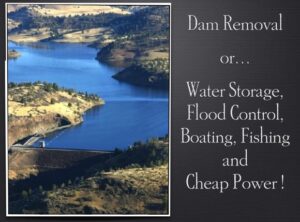
My Dam Letter to Ryan Zinke

Oregon State Legislature sent this bulletin Wednesday, November 1, 2017 by devadmin

Recently, Congressman LaMalfa (CA-R) hand-delivered constituent letters to a meeting with Secretary of Interior, Ryan Zinke. The bundle of letters expressed strong opposition to removing the four Klamath River hydro-electric generating facilities.

You may also submit your own comments regarding dam removal to the Federal Energy Regulatory Commission (FERC)

1. Go to https://ferconline.ferc.gov/quickcomment.aspx

2. Enter your information including e-mail. Open automatic e-mail from FERC, follow link from there to submit comment.

3. In the Docket field, enter P-2082-062 to specify the project.


My own letter to Secretary Zinke is included below, for your perusal:


Department of the Interior

Secretary Ryan Zinke

1849 C Street, NW

Washington DC  20240

Re: Klamath River Dam Removals

October 20, 2017

On October 17, 2016, President Obama’s Secretary of the Department of the Interior (DOI), Sally Jewel, submitted a recommendation to the Secretary of Federal Energy Regulatory Commission (FERC) advocating for the removal of four hydroelectric facilities on the Klamath River.

Jewel’s recommendation is diametrically opposed to the opinions of my constituents, in Southern Oregon. Nearly 80% of voters in Klamath County, Oregon and Siskiyou County, California, where the dams are located, expressed their strong opposition to destroying these four important facilities. These dams currently provide a consistent supply of low-cost, renewable, hydro-electric base-load grid-power.

Jewel writes, “While these dams brought prosperity to many, their construction came at a steep cost to tribes and fishing communities. The returning runs of salmon repeatedly bludgeoning themselves against the new dam walls were a harbinger of a declining fishery that cast a cloud over those who, for millennia, have called the Klamath home.”

These statements are all misleading. First, the dams not only brought prosperity to the region, but they continue to bring prosperity to all people groups throughout the Pacific Northwest. Throughout Oregon and the Northwest, enormous percentages of electrical grid supply is provided by the inexpensive, run-of-river hydro-electric generation facilities in the region.

Second, I would suggest that salmon are not “bludgeoning themselves” against existing dam structures that have been in place for over a half-century. School children know that salmon return to the place where they were hatched to spawn. This means that scores of generations and millions and millions of salmon have never tried to swim past the dams. Also, fish ladders currently exist to help native fishes return to their spawning grounds and they have been successfully navigating these waters for decades.

Third, the problems associated with enormous volumes of sludge accumulated behind the dam structures ought to be a genuine concern for future generations of salmon, trout, aquatic wildlife and river habitat. The Draft Environmental Impact Statement did not address or investigate mitigation efforts that might be required to handle the potential damage from the estimated 20 million cubic yards of accumulated sediment. This issue is not easily side-stepped because it is an equivalent 2 million ten-yard dump truck loads of silt, sediment and sludge which will be dumped into the river system. Surely, the existing downstream salmon fisheries will bear the burden from this harmful sludge.

Fourth, “the greatest harbinger of a declining fisheries which might cast clouds over” those who live, work, and play in the Klamath region needs to be correctly identified. It isn’t dams. Rather, like the rampant wolf population explosions in Montana, the salmon declines are directly related to federal policies.

The passage of the Marine Mammal Protection Act (MMPA) in 1972 committed the United States to long-term management, conservation, and moratoriums on taking marine mammals, like the seals, sea lions and porpoises. Studies by the National Oceanic and Atmospheric Administration (NOAA) have documented the enormous growth in sea lion populations and the negative impact that seals and sea lions have on free swimming salmonids in rivers and estuaries in the Northwest.

This is no small matter. The sea lion population has ballooned to over 300,000 mammals in the Pacific Northwest. Each adult lion consumes nearly 18 pounds of fish per day. This equates to a take of nearly one million tons of fish annually.

Additionally, salmon are a transpacific anadromous species that spends between three and five years in the Pacific Ocean migratory patterns before returning to their spawning grounds. During this time in the open ocean uncontrolled foreign fishing fleets have years of unfettered access to these fish populations.

Therefore, the dams are not the problem.

The salmon populations have been thriving while the dams have been in place. The dams provide inexpensive, renewable electricity, flow control for watershed volume and temperature, recreation and agricultural reservoir capacity, and Forest Service fire suppression storage in the extremely remote regions of Northern California and Southern Oregon.

Decommissioning and removing the dams owned by PacifiCorp is not about the river, its cultural significance, jobs, race, ag-business, or water. Rather it’s a potpourri of special interests, rent-seekers disguised as noble businessmen, enlarged bureaucratic dominion and strategically manipulated environmental emotions

I humbly ask for your consideration of the items I have enumerated here and the evidence that has been accumulated by the investigating agencies. I also suggest that a willingness to listen to the constituents who have lived, worked and invested their lives in the Klamath River watershed should play an important role in your determination.

In closing, as a State Senator representing Southern Oregon, my constituents have made their voices clear. The dams are viable economic assets that taxpayers have funded. Destroying these resources will not contribute to Making America Great Again.

Therefore, my request is that the Bureau of Reclamation (BOR) deny the decommissioning of the four dams within the Klamath River system.

Sincerely,

Dennis Linthicum
Oregon State Senate 28
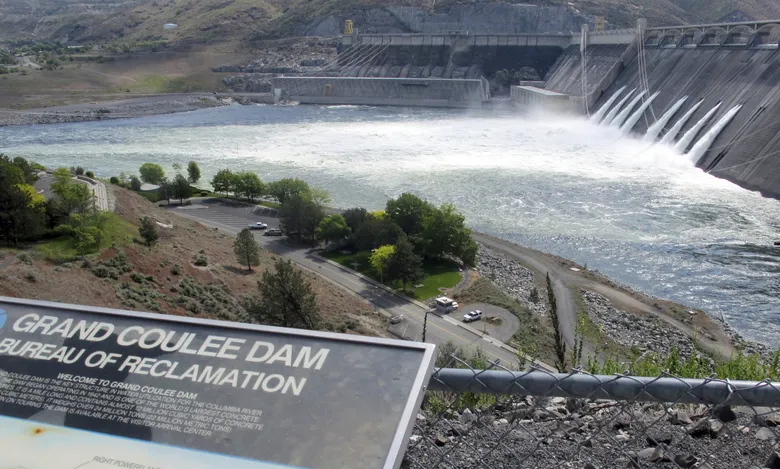
Dam Letter

Oregon State Legislature sent this bulletin sunday, February 1, 2017, by devadmin

Recently, Congressman LaMalfa (CA-R) hand-delivered constituent letters to a meeting with Secretary of Interior, Ryan Zinke. The bundle of letters expressed strong opposition to removing the four Klamath River hydro-electric generating facilities.

You may also submit your own comments regarding dam removal to the Federal Energy Regulatory Commission (FERC)

1. Go to https://ferconline.ferc.gov/quickcomment.aspx

2. Enter your information including e-mail. Open automatic e-mail from FERC, follow link from there to submit comment.

3. In the Docket field, enter P-2082-062 to specify the project.


My own letter to Secretary Zinke is included below, for your perusal:


Department of the Interior

Secretary Ryan Zinke

1849 C Street, NW

Washington DC  20240

Re: Klamath River Dam Removals

October 20, 2017

On October 17, 2016, President Obama’s Secretary of the Department of the Interior (DOI), Sally Jewel, submitted a recommendation to the Secretary of Federal Energy Regulatory Commission (FERC) advocating for the removal of four hydroelectric facilities on the Klamath River.

Jewel’s recommendation is diametrically opposed to the opinions of my constituents, in Southern Oregon. Nearly 80% of voters in Klamath County, Oregon and Siskiyou County, California, where the dams are located, expressed their strong opposition to destroying these four important facilities. These dams currently provide a consistent supply of low-cost, renewable, hydro-electric base-load grid-power.

Jewel writes, “While these dams brought prosperity to many, their construction came at a steep cost to tribes and fishing communities. The returning runs of salmon repeatedly bludgeoning themselves against the new dam walls were a harbinger of a declining fishery that cast a cloud over those who, for millennia, have called the Klamath home.”

These statements are all misleading. First, the dams not only brought prosperity to the region, but they continue to bring prosperity to all people groups throughout the Pacific Northwest. Throughout Oregon and the Northwest, enormous percentages of electrical grid supply is provided by the inexpensive, run-of-river hydro-electric generation facilities in the region.

Second, I would suggest that salmon are not “bludgeoning themselves” against existing dam structures that have been in place for over a half-century. School children know that salmon return to the place where they were hatched to spawn. This means that scores of generations and millions and millions of salmon have never tried to swim past the dams. Also, fish ladders currently exist to help native fishes return to their spawning grounds and they have been successfully navigating these waters for decades.

Third, the problems associated with enormous volumes of sludge accumulated behind the dam structures ought to be a genuine concern for future generations of salmon, trout, aquatic wildlife and river habitat. The Draft Environmental Impact Statement did not address or investigate mitigation efforts that might be required to handle the potential damage from the estimated 20 million cubic yards of accumulated sediment. This issue is not easily side-stepped because it is an equivalent 2 million ten-yard dump truck loads of silt, sediment and sludge which will be dumped into the river system. Surely, the existing downstream salmon fisheries will bear the burden from this harmful sludge.

Fourth, “the greatest harbinger of a declining fisheries which might cast clouds over” those who live, work, and play in the Klamath region needs to be correctly identified. It isn’t dams. Rather, like the rampant wolf population explosions in Montana, the salmon declines are directly related to federal policies.

The passage of the Marine Mammal Protection Act (MMPA) in 1972 committed the United States to long-term management, conservation, and moratoriums on taking marine mammals, like the seals, sea lions and porpoises. Studies by the National Oceanic and Atmospheric Administration (NOAA) have documented the enormous growth in sea lion populations and the negative impact that seals and sea lions have on free swimming salmonids in rivers and estuaries in the Northwest.

This is no small matter. The sea lion population has ballooned to over 300,000 mammals in the Pacific Northwest. Each adult lion consumes nearly 18 pounds of fish per day. This equates to a take of nearly one million tons of fish annually.

Additionally, salmon are a transpacific anadromous species that spends between three and five years in the Pacific Ocean migratory patterns before returning to their spawning grounds. During this time in the open ocean uncontrolled foreign fishing fleets have years of unfettered access to these fish populations.

Therefore, the dams are not the problem.

The salmon populations have been thriving while the dams have been in place. The dams provide inexpensive, renewable electricity, flow control for watershed volume and temperature, recreation and agricultural reservoir capacity, and Forest Service fire suppression storage in the extremely remote regions of Northern California and Southern Oregon.

Decommissioning and removing the dams owned by PacifiCorp is not about the river, its cultural significance, jobs, race, ag-business, or water. Rather it’s a potpourri of special interests, rent-seekers disguised as noble businessmen, enlarged bureaucratic dominion and strategically manipulated environmental emotions

I humbly ask for your consideration of the items I have enumerated here and the evidence that has been accumulated by the investigating agencies. I also suggest that a willingness to listen to the constituents who have lived, worked and invested their lives in the Klamath River watershed should play an important role in your determination.

In closing, as a State Senator representing Southern Oregon, my constituents have made their voices clear. The dams are viable economic assets that taxpayers have funded. Destroying these resources will not contribute to Making America Great Again.

Therefore, my request is that the Bureau of Reclamation (BOR) deny the decommissioning of the four dams within the Klamath River system.

Sincerely,

Dennis Linthicum
Oregon State Senate 28