Power Corrupts

Oregon State Legislature sent this bulletin Wednesday, december 19, 2023, by devadmin

This week I am in Washington, D.C. I, like yourselves have been shocked and horrified by the evil that was committed in Las Vegas a couple of days ago. However, I will not deal with the underlying issues, the control, politics, stability or religion that might shed insight into this tragedy.


Instead, I will continue my series of articles concerning government over-reach of and the seemingly unending costs associated with running the government enterprise. While writing these articles, I receive numerous letters, emails and phone calls telling me about the good things that government accomplishes. I am, in fact, fully aware of the good people who have dedicated their lives to performing some service to the rest of us. Ofttimes these services are provided under the flag of government responsibility, or jurisdiction, while at other times they are services provided by great-hearted people.

That there are hundreds of thousands of good men and women employed and doing valuable and necessary services for the rest of us is unquestionably true. For example, in one response from last week’s article about federal forest policy a friend wrote to describe the story of he and his wife. They experienced first-hand what it was like to be under evacuation orders.

He wrote:

“Our home was in the direct path of the advancing fire.  I am positive without the excellent firefighting skills of all government jurisdictions our home may not be here today.  Everyone at all levels of government were so genuinely helpful, honest and transparent.  It was clear to me that these government employees live in the area and are fully aware of the citizen’s needs.  We found that refreshing.”

This letter underscores the point with powerful clarity – Good people provide Good service. Additionally, their service furnishes warmth to the soul and provides an uplifting sense of comfort and safety to our communities.

As I write my newsletters, my issue with statism is not about necessary, and legitimate, rules and regulations. To even invoke the possibility that our extremely complex and modern society could function without any rules, regulations or governance structures is less than a straw man. It simply can’t be done. In the same way, however, it can be overdone.

This is my point – When is too much, too much? Do we even know what too much looks like?

In general, too much means monopoly. Monopolies, in turn, are too expensive, non-competitive, unresponsive and deliver poorer results with little to no recourse for the affected souls.

Adam Smith’s teacher was Adam Ferguson at the University of Edinburgh. In 1792, he wrote about the relationship between freedom and anarchy, “Liberty or freedom is not as the origin of the name may seem to imply, and exemption from all restraint, but rather a most effectual application of every just restraint to all members of a free state, whether they be magistrates or subjects.”

Best Regards,

He continued, “It is under just restraints only that every person is safe, and cannot be invaded, either in the freedom of his person, his property, or innocent action…”

To ensure that liberty remained a fundamental characteristic of our constitutionally federated Republic the notion of Separation of Powers was introduced.  First, this was specifically instituted among the three separate branches of the national government. Also, a degree of separation existed among office holders, through elections. Elections were further separated by varied lengths of terms in office

Further separation was mandated among the free and independent states which are also constitutionally required to be organized as republics. Then, within each state, among their various counties, municipalities and townships there was a further delineation of jurisdiction and authority. These separations were designed to lessen the possibility of any local despot gaining complete control over a council or municipality.

But, James Madison saw the weakness. He addressed the failings that might result from a false faith in constitutionally structured offices. In Federalist 47, he writes, “The accumulation of all powers, legislative, executive, and judiciary, in the same hands, whether of one, a few, or many, and whether hereditary, self-appointed, or elective, may justly be pronounced the very definition of tyranny.”

These checks and balances were instituted because one of the major goals of the Constitution, as stated in the preamble, is to “secure the Blessings of Liberty to ourselves and our Posterity.” The separation of powers with appropriate checks and balances was expressly forwarded to combat the tendency of conspiring men to seek power while neglecting their public offices and duties.

Our Nation’s founders recognized Lord Acton’s apothegm, “Power corrupts and absolute power corrupts absolutely.” They knew and had first-hand experience with the most powerful empire on the earth and they tried to protect us from tyrannical governments both large and small.

Thomas Jefferson is known to have championed a smaller, more decentralized idea of governance by independent yeomen−citizens.

However, the potential for over-reach even exists amongst local counties and townships led by their yeomen−citizenry. Alexander Hamilton termed these jurisdictions as societies and he highlights the potential for over-reach in terms of size. Today, we can add financial or economic where-with-all to Hamilton’s warnings. Hamilton notes that any acts which are “not pursuant to its constitutional powers, but which are invasions of the residuary authorities of the smaller societies,” should never become the supreme law of the land. He summarizes saying, “These [unconstitutional acts] will be merely acts of usurpation, and will deserve to be treated as such.”

It is this closing that deserves our attention. Will we suffer the collapse of these separations, checks and balances? Will we allow unconstitutional acts to become the new-fangled, supreme law of the land or will we respond to them as mere acts of usurpation?

My contention is that Lord Acton’s apothegm is still relevant – “Power corrupts and absolute power corrupts absolutely.”

Remember, if we don’t stand for rural Oregon values and common-sense – No one will!

Dennis Linthicum
Oregon State Senate 28

Twin Pincers

Oregon State Legislature sent this bulletin Wednesday, december 19, 2023 by devadmin

The current fiasco on the national stage, with the House Democrats threatening to impeach President Trump and all of the fanfare in Washington, DC isn’t really anything new. We’ve seen it all before and we’ve all heard the proverb, “There is nothing new under the sun.”

What I find most compelling about the sordid affair is that conservatives are being ‘woke’ in a new way. Up until now, the political left had control over what subjects needed to be ‘woken,’ but now the underhanded nature and deceit of the whole ‘investigation’ has put big government, itself, on trial and that’s what the left finds unacceptable. What… dismantle the deep-state?

Back in the early 1950’s our nation faced a similar set of hearings. The Republican House was investigating communist infiltration efforts within the State Department and federal government. They used FBI resources and federal manpower to expose the seriousness of Russia’s efforts. Similar to today’s fanfare, everyone was absorbed by the gossip and accusations that made headlines, only then, it was proven true and today it appears to be only “fake-news.”

Whitaker Chambers was one of the key witnesses. He was a former communist party member who had abandoned that part of his life’s destructive trajectory. During the trial, he said he hoped his testimony would help Americans, “recognize at last that they are at grips with a secret, sinister, and enormously powerful force whose tireless purpose is their enslavement.”

Chambers identified the many famous names who added weight to the fervor for communism. Included were well-known authors John Steinbeck and Lillian Hellman, along with poets Malcolm Cowley, Archibald MacLeish and Dorothy Parker. These were the Hollywood elites and MTV crowd of the day who weren’t afraid to be known as communist sympathizers. At the time, politicians and bureaucrats had to keep their socialist leanings under wraps, unlike today’s Democrat party presidential candidates.

In Oregon today, just as we see at the federal level, our freedoms are being squeezed by the ever-present, twin pincers of socialism. One tong is the Marxist revolutionaries, like the Antifa gang in downtown Portland, who desire power through violence. Marx, after all, wanted to achieve his goals through revolution. The other tong is gradualism. This is the slow and meticulous pressure that comes through rules, regulations, laws, commissions and agencies springing from the fertile womb of the maternal state.

During each legislative session, legislators pass more laws and the state gains more power, while families and individuals lose freedom. The bureaucracies, agencies, administrative and executive offices exercise greater control over more and more facets of our individual lives.

Both pincers have the potential to crush and destroy our existing culture and force monopolistic government power over the people of Oregon.

In his 1979 book, The World in the Grip of an Idea, scholar and economist, Clarence Carson explains why political forces focus on deriding traditional values, family, sexuality, property and Christianity:

“The engine of Marxism is hatred, hatred for everything as it is, hatred of religion, hatred of the family, hatred of the division of labor, hatred of the state, hatred of capitalists, hatred of property, hatred of the “rural idiocy” (as Marx put it) of farmers, and, yes, hatred of industrial workers. …  Above all, Marxism is a hatred of the past, everything shaped out of it, everything drawn from it, which is to say, just about everything. In short, Marxism hates man as he is and has been.”

Carson’s book examines the results of socialism across three countries, England, Sweden, and the United States and his conclusion is:

“The modus operandi of Marxism is destruction. That is the true meaning of Marxian revolution. It is no simple seizure of political power. …  All the actuality that has been accumulated through the ages must be destroyed—property relationships, religious belief, family ties, legal forms, the intellectual heritage, culture and civilization itself. How else, but by tyranny, can such a destruction be wrought?”

Therefore, we must align our Hope with Virtue, Tradition and Truth. We must avoid getting trampled by a manipulated worldview where up is down, left is right, male is female, and nothing is as it once was. Otherwise, we will find ourselves standing squarely in the quicksand of uncertainty.

There is no reason to buy into the super-majority’s demonization of businesses as the source of our state’s problems. Businesses are the source of productivity.

There is no reason to dismantle our historical and societal understanding of male and female, fathers and mothers, brothers and sisters, uncles and aunts, and all of their various and sundry complicated relationships. They are the source of our families, our friends and our communities.

There is no reason to disrespect the fundamental right of a parent to direct the care, teaching and education of their own children. Self-government requires that families master themselves, including the management of their own affairs as individuals, families and through voluntary associations of church and community.

There is no reason to imagine that “free college” will make college tuition less expensive. Neither will “free college” solve the employability problems of our youth nor will it increase our state’s labor force participation rates. Ownership and personal responsibility are the truest source of productive freedom for the individual. A student’s motives, desires and goals must be priced into the decision-making process of choosing an education or career path.

The political crisis of our time comes from people imagining that governments, gorged with taxpayer money and immense regulatory power, can provide individuals with an endless array of efficient services, security and liberty.

Remember the proverb, “There is nothing new under the sun?” The danger we face has been seen before. Alexis De Tocqueville described it in his 1832 book, Democracy in America:

“[The power of government] covers the surface of society with a network of small complicated rules, minute and uniform, through which the most original minds and the most energetic characters cannot penetrate, to rise above the crowd. The will of man is not shattered, but softened, bent and guided; men are seldom forced by it to act, but they are constantly restrained from acting. Such a power . . . does not tyrannize, but it compresses, enervates, extinguishes and stupefies a people, until each nation is reduced to nothing better than a flock of timid and hard-working animals, of which the government is the shepherd.”

Allow Freedom to win. Vote for traditional values, fiscal responsibility and enforcing constitutional restraints on governmental authority.

Our firmness, resolution and perseverance are the tools we possess to protect our ourselves, our families and posterity from the historical tragedy of socialism. Let us not become “sheeple” following mindlessly to our own demise. Instead, let us continue to make our voices heard through the ballot box, peaceful rallies, public testimony for truth and science, and our own unwavering commitment to voluntary markets, individual liberty and personal responsibility.

Remember, if we don’t stand for rural Oregon values and common-sense, no one will!

Dennis Linthicum
Oregon State Senate 28
Siren’s Song

Oregon State Legislature sent this bulletin Wednesday, december 19, 2023 by devadmin

Radical progressives in Oregon are hoping for a blue wave in November. The American Spectator expects Trump’s national achievements and momentum will bring a red wave. Which will it be?

The Spectator admits, “There are those polls saying that millennials are as interested in communism as in capitalism, and there is the more anecdotal evidence within the Democrat Party that Bernie Sanders-style socialism is ascendant. The Democrat primary victory by avowed socialist Alexandria Ocasio-Cortez over New York congressman Joe Crowley is being lauded as an example of the country’s lurch leftward; the party’s chairman Tom Perez even called Ocasio-Cortez its ‘future’ last week.”

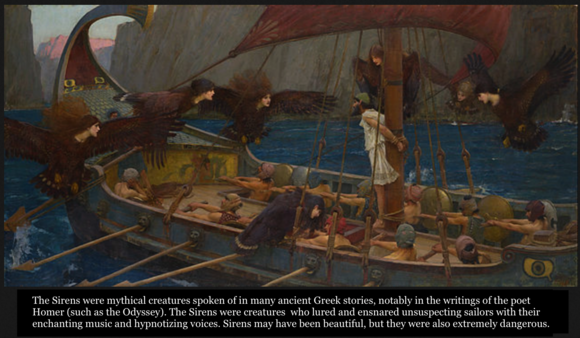
Is this trend happening in Oregon? Are we trending left, or right? Are young collegiates hearkening toward the Siren’s song of socialism? Are they smitten with attractive promises for unlimited equality and high paying jobs? According to the rhetoric, aside from gaining equality, there will also be plenty of battery operated gadgets – smart phones and $100k Teslas, – all powered by “clean” energy with restored global ice-caps and endless wildlife living happily ever-after on a pristine planet.

Or, maybe there is a different draw.

Maybe they have watched our last several generations slowly succumb to a socialist-oriented bureaucracy. Many in Oregon mistakenly believe that our municipalities, counties, state and federal governments will manage our affairs better than ourselves. Maybe this latter tendency has led the young to wonder if ‘real’ socialism might work?

Our lives have witnessed government intervention and regulations growing at a relentless pace. This enlargement of government is straining budgets because of the health, wage and pension benefits dedicated to the elites and public servant classes. Budgetary stress, in turn, creates the need for more revenue, meaning taxes will increase by leaps and bounds as baby-boomers retire.

The estimate is that 10,000 boomers will retire daily for the next 20 years! This is the wave we should be wary of. It is not a blue wave or a red wave but is a budgetary tsunami that will overturn and capsize government budgets around the nation. It is the taxpayer’s worst nightmare.

First, each retiree will no longer be at the office, yet the taxpayer is obligated to pay benefits for the next 30 years or more. Yet, the current retirement plan structure doesn’t generate the cashflow required to meet the promised payout.

Second, the original position is now empty. However, it’s part of the budget; it has been a justified position for the past umpteen years and it is on the state’s org-chart. The assumption is that it must be filled.

No one asks whether it is a service that anyone needs or wants. No one even contemplates whether it is a service that government should provide. The slot is open; we’ve always done it this way; it must be filled. Today’s new-hire will come at an inflated salary level compared to when the original position was dreamed up decades ago.

Although Oregon’s economic forecasters say the outlook is rosy, our local school districts, library districts, municipalities and county governments are facing enormous hurdles. While the state is enjoying economic expansion and private-sector incomes are rising, so are tax burdens and public-sector salaries. This will slow the needed private-sector economy which is, ultimately, the sole source for funding the state.

The private-sector can only grow if the government shows fiscal restraint which is something Gov. Brown doesn’t appear willing to do. Remember, Brown signed SB 1528 which increased taxes on small businesses by an additional $1 billion over the next several bienniums. The Democrat majority did not have to raise taxes in order to balance Oregon’s current budget. Instead, out-of-touch, tax and spend progressives sponsored SB 1528 as a needless poke at President Trump’s tax reform efforts and, in turn, directly burdened Oregon’s small and family-owned businesses.

Throughout history, many have wondered about the forces, or waves of sentiment, that shape the destiny of states and their cultures. Henning W. Prentis, Jr. spoke to students during a 1943 address at the University of Pennsylvania’s Mid-Year Convocation. He said:

“Paradoxically enough, the release of initiative and enterprise made possible by popular self-government ultimately genrates disintegrating forces from within. Again and again after freedom has brought opportunity and some degree of plenty, the competent become selfish, luxury-loving and complacent; the incompetent and the unfortunate grow envious and covetous, and all three groups turn aside from the hard road of freedom to worship the Golden Calf of economic security.”

It sounds like he is speaking directly to us even though last week we celebrated our nation’s most sublime historical achievement, the 242nd anniversary of “the unanimous Declaration of the thirteen united States.” Our founders set the standard, they were willing to sacrifice their lives to choose Liberty over security.

Thomas Jefferson who penned the Declaration of Independence using only a goose quill, parchment and some India ink noted, “The true foundation of republican government is the equal right of every citizen, in his person and property, and in their management.”

This freedom, allowing the individual to manage his own life, business and property is part of the fabric of our American traditions. These traditions were universally woven into beliefs which spawned the very enterprises which became foundational to our own self-governance.

This brings several questions to mind:

  • Is this old school thinking?
  • Doesn’t this universally apply to all people?
  • Will young Oregonians fall for the deceptive trap offered by socialism?
  • Would the re-election of Gov. Brown afford every citizen control of their own lives, property and destiny?
  • Would a Democrat super-majority provide citizens with more freedoms and opportunity or burden them with needless meddling and taxes?

The liberal progressives of the Antifa, Occupy-ICE, and Dump-Trumpster movements will be rallying to bring Oregon’s Democrat party further left by claiming to love freedom, fairness and equality. Yet, they promote endless discord through their totalitarian tendencies. They may have sincere motives, but their actions expose their own opulence while loosening the bands of public virtue, expanding intolerance and sowing the seeds of future faction and discord.

This is the paradox of our freedom. Our liberty tends towards license, our initiative and enterprise beggars envy, and our own prosperity becomes burdensome and debauched as government meddling grows.

But, thankfully, this is not the end of the story. In every election cycle, we the people have the ability to elect officeholders who will promote Liberty. This November, we can turn Oregon back to its prosperous roots by advancing more freedom, less government and lower taxes!

Remember, if we don’t stand for rural-Oregon values and common sense – No one will!

Dennis Linthicum
Oregon State Senate 28

Poison Fruit…

Oregon State Legislature sent this bulletin Wednesday, december 19, 2023 by devadmin

Super majorities and the poison fruit of statism can grow in orchards on both the left and right sides of the road. We know this because history informs us and dictates what we will see tomorrow. Patrick Henry told us, “I have but one lamp by which my feet are guided, and that is the lamp of experience. I know no way to judge the future but by the past.”

In today’s newsletter, I am going to bypass several thousand bills that are in the Legislature. I’m going to skip-over the gross receipts sales tax, the carbon tax, the recent ban on plastic straws, as well as, the “mandatory requirement for vaccinations in exchange for education benefits” rigamarole.

Instead, I want to focus attention on the Oregon disarmament bill: SB 978. It is still alive and like a zombie is shuffling through the hallways of the marble palace. This bill continues to exist by the force of this administration’s empty rhetoric and faulty logic.

SB 978 represents a purposeful and energetic effort for disarming Oregonians and infringing on their liberties. The sheer animosity leveled against law abiding citizens is inscrutable and illustrates a complete disrespect for our 2nd Amendment rights. The magical facade of “needed reform” is all that is necessary to mask the demolition of our constitutional liberties. It appears that the real goal is total disarmament of law-abiding Oregonians.

The pretense of the bill is that crime is pervasive; guns are unsafe; children are being killed and something needs to be done. Perfectly fine sentiment, yet, where are the statistics for Oregon’s problems? Remember, the original SB 978 was a proposal for a reporting and fact finding effort to determine which policy changes would effectively impact gun violence. Apparently, no one cares about the real data.
There are more firearms in Oregon than people. In the presence of millions of firearms and billions of rounds of ammunition how many unlocked, or unserialized firearms have been used in crimes? Additionally, there are more firearms in Oregon than vehicles, but there are more vehicle deaths than firearm injuries, where is the balance?
Unfortunately, the bill, as it stands, focuses on creating more arbitrary, capricious and unnecessary crimes that can’t be universally enforced because of the sheer scope of probable violations. This means selective enforcement opportunities will likely be used against political opponents while the issues associated with enforcement among racial or other protected classes will be pervasive. Actually, selective enforcement will certainly entrap any number of law-abiding citizens who might experience outlandishly improbable circumstances.
Among the 44 pages of over-reaching legalese, if a firearm is used to injure a person, or property, within two years of a gun transfer through sale, gift, or theft where a safety device was defeated by the crook, the owner of the firearm is held “strictly liable” for injuries.
The devious thrust of this language is aimed at discouraging and reducing firearm ownership through fear and financial intimidation. The “strict liability” language purposefully supports unjust and unfair treatment of gun owners because, as defendants, they will be held liable for some future event that is totally unrelated to their actions or intentions for a period of up to two years. Additionally, once the gun is stolen and the owner no longer has control, crimes committed by the criminal impact the level and severity of criminal charges brought against the legal owner of the weapon.
Please follow that logic with care…
Let me illustrate using a vehicle equivalent: if someone steals your car for a joy-ride to the burger joint, your criminal charges would be minor. However, if they used your rig as the get-away car for a bank robbery your criminal charges would be more serious. Lastly, if the car-thieves get into a fatal accident, your criminal charges would pile up like roadside wreckage. So, if an individual follows best practices and locks their car in a well-lighted area, why would the state want to hold them liable for someone else’s criminal activities? Clearly, fewer people would want to own cars under these circumstances.
While it appears that criminal violations are built upon solid circumstances (Sec. 5 – 9), the keystone is actually missing. Namely, the rules and minimum specifications required for trigger locks, cable locks, and tamper-resistant locks on all containers, buildings, rooms and doors which aren’t yet defined. This means that legislators who vote for this bill will have no idea what they are voting for in the way of future requirements. What if the rules require an absurd 1″ Stainless Wire Rope EIPS IWRC – 6×37 Class cable? What would gun-owners do?
These rules won’t come from mechanical engineers but they will come from the governor’s chosen one within the Oregon Health Authority, in consultation with State Police.
Keeping history as our guide, let’s roll through some historic episodes and ask ourselves, “Who was in charge, the individual or the state?”
Consider Lenin’s Bolshevik revolution, Stalin’s Siberian Gulags, Mao’s Great Leap Forward, Pol Pot’s Khmer Rouge, Pasha’s Armenian Genocide, or Maduro’s Venezuela?
Far in excess of 100 million people lost their lives and are still suffering intense persecutions. What was the first liberty these regimes took from their targeted populations? Their guns! What did they lose next? Free speech; free association; eventually, their lives.
Did these regimes operate on the consent of the governed? No. Were these citizens able to resist the tyrannies that befell them? No. Could they protect their lives, liberty and property? No.
The blow-back that I typically receive is that these episodes of genocide are so horrific they couldn’t possibly happen here. Well, then, why the effort to disarm law-abiding citizens?
Thousands of Oregonians, from across all party lines – Republicans, Democrats, Independents, Greens and Non-Affiliated Voters – and across all backgrounds have written to me and are outraged at this anti-gun-owner bill.
In closing, President Dwight D. Eisenhower said, “If all that Americans want is security, they can go to prison. They’ll have enough to eat, a bed and a roof over their heads. But if an American wants to preserve his dignity and his equality as a human being, he must not bow his neck to any dictatorial government.”
Remember, if we don’t stand for rural-Oregon values and common sense – No one Will!

Dennis Linthicum
Oregon State Senate 28

Stripping Due Process…

Oregon State Legislature sent this bulletin Wednesday, december 19, 2023 by devadmin

When a calf dies at birth, a rancher might decide to “graft” a substitute calf so that the mother cow can provide nurture to the substitute. The most reliable form of grafting happens when the hide of the dead calf is put onto the substitute calf. The cow knows the smell of her own calf (even if it was dead at birth) and this substitution can trick the cow into accepting the substitute as her own.

In the Oregon legislature, when a bill dies, something else can get grafted into its hide. Around the capital this is known as a “gut and stuff.” You might think of it like putting a wolf into the sheep’s clothing.

Last week an extremely disturbing water bill was dropped into a Senate Judiciary Committee placeholder bill with a “relating to courts” clause. This water bill fits neatly into this category because parties affected by a final order during a regulatory water action can appeal to the circuit court, or the Court of Appeals. The court has the authority to affirm, reverse, or modify the original order.

The Bill (977-1), would eliminate an irrigator’s ability to secure a “stay,” or pause, in the action ordered by the regulating agency as prescribed in ORS 536.075 (5). The opportunity for a “stay” provides water user protection and due process while being a safety valve against frivolousinvalidfutile, or erroneous final orders. The rules, in place since the mid-80’s, recognize that orders may have been secured with poorly-developed evidentiary findings, inconsistent applicability, or for nefarious purposes.

The sub-section that would be stripped from a right holder’s toolbox is:

ORS 536.075 (5) The filing of a petition in either the circuit court or the Court of Appeals shall stay enforcement of the order of the commission or the department unless the commission or the department determines that substantial public harm will result if the order is stayed. If the commission or the department denies the stay, the denial shall be in writing and shall specifically state the substantial public harm that will result from allowing the stay.

Destroying this part of procedural due process would be devastating to water right holders who are under a curtailment action during or mid-way through an irrigation season.

For background, Oregon water rights are regulated in accordance with the doctrine of prior appropriation. This means that in times of water shortages, senior water right holders are entitled to have their rights fully satisfied before junior users are entitled to their water rights. Please note, both senior and secondary water rights are vested property rights that cannot be altered without due process of law.

When a secondary user is curtailed, due process consists of, first, a written notice, and, second, a meaningful opportunity to be heard before a neutral body prior to being deprived of that vested property interest.

The existing statute ensures that in situations where there is significant uncertainty as to whether a junior user is being erroneously curtailed, Oregon Water Resource Department (OWRD) shut-off orders are stayed until such time as the junior user has the opportunity to be heard in court. The stay action is extremely important because it allows irrigators to continue their agricultural business operations while awaiting more thorough research.

Many times, curtailment orders across the state are inappropriately issued because of bad science, misinformation or stratagems approaching malfeasance. Last season, nearly 140 groundwater wells were curtailed due to OWRD’s faulty modeling and unjustified regulation. In turn, nearly a dozen of these agricultural operations filed appeals and were granted the stay. OWRD eventually agreed to settle and pay irrigators’ attorney fees and court costs and the irrigators were allowed to continue their operations.

In these due process cases, and many others, the automatic stay granted under ORS 536.075 (5) was justified because the agency took arbitrary positions that were contrary to either the facts, or the law, or both.

This happens again and again, all over the state.

The importance of the statute is that it ensures irrigators’ rights are preserved before their water use is needlessly curtailed and their property right unjustly taken.

Statewide, as in the examples cited, impertinent arguments could stop any agricultural enterprise dead in its tracks. This action would be economically devastating to the junior water right holder, harm private property rights, the local community and public good, while tipping the balance of unmitigated power. The needless removal of this statute would enhance the opportunity for future bureaucratic or process corruption while weakening the overall rule of law.

Our nation’s founders were familiar with the subject of corruption. They took for granted that the dominant motive of human behavior was self-interest, and that this drive found its “most extreme political expression in an insatiable lust for power.” In recognizing this they devised a system of checks, balances and procedural due processes that could successfully thwart “the predominant thirst of dominion which has invariably and uniformly prompted rulers to abuse their power.

Please write to your legislators today! (Click here to submit testimony)

Oppose SB 977-1 because it would allow the default taking of a citizen’s property right while stripping away the property holder’s access to effectual redress by creating a lop-sided legal process.

The hearing is scheduled for Monday, April 8, 2019, at 8:00AM.

If you are in the Salem area or are nearby, please consider coming in to testify.

Remember, “If you are negligent or inattentive, the ambitious and despotic will entrap you in their toils, and bind you with the cord of power from which you, and your posterity, may never be freed.”   – Cato I, New York Journal, September 27, 1787

If we don’t stand for rural Oregon values and common sense – No one will!

Dennis Linthicum
Oregon State Senate 28

A Flanking Maneuver Against…

Oregon State Legislature sent this bulletin Wednesday, February 5, 2020 by devadmin

At the beginning of the new year, in 1776, Thomas Paine published a Pamphlet to support the Patriot cause,  Common Sense. He wrote with clear, concise and beautifully simple word pictures that successfully rallied American colonists against the over-reaching rule of the British crown.

First, Paine set the stage by noting that the public often mistakes society with government.  This happens in our era, too. We mistake laws flowing from our state’s bureaucratic agencies as cultural or societal necessities, but they are not. Paine paints a picture where people are allowed to freely engage and work together to accomplish private tasks that improve the community, without requiring central planning or authority. He notes society and government are different, and,

“… they are not only different, but have different origins. Society is produced by our wants, and government by our wickedness; the former promotes our happiness POSITIVELY by uniting our affections, the latter NEGATIVELY by restraining our vices. The one encourages intercourse, the other creates distinctions. The first is a patron, the last a punisher.”

I recommend reading Paine’s small booklet because you will see similarities between what Paine describes from 250 years ago and what we experience in Oregon today. Namely, Oregonians are continually pounded by an unrelenting tide of laws, rules and regulations that burden the average farmer, rancher, forester, timber hauler, accountant, retailer and entrepreneur beyond measure.

For example, during the Legislature’s 2019 session, there were 2,768 bills introduced, with about 700 laws signed by the Governor. The several hundred, or more, rules and regulations which have not yet been spawned will soon be flowing downstream from the agencies which are tasked with enforcement.

No doubt, our errors in self-governance partially stem from our own failings. I know this because I often get letters, emails and phone messages where people suggest their version of a great legislative idea. You already know the refrain, “There ought to be a Law…”

These ideas, might be wonderful, but there are always trade-offs and other issues to consider: what does it cost, who makes the rules, how many rules will get created, what sanctions will be imposed, who governs enforcement, how will discrepancies be judged, are the desired outcomes accomplished, what are the unintended consequences that will seep through the fabric of our communities?

To illustrate, my wife was recently at a large retail outlet standing in line with 6 individuals ahead of her and 5, or more, behind her. They were all waiting for service, with some exhibiting more patience than others. The two young men at the counter were doing a great job of helping each customer and did so with courtesy and efficiency. As one of the clerks finished his task, the next customer moved forward.

With clear frustration, the clerk said, “I’m sorry but I have to take my, ‘legally mandated’ break now.” While he was closing his station, he added sympathetically, “I know it’s busy, but I have no choice, I have to take this break.”

My wife said she thought this, “young man could have carried an elk carcass back to camp all by his lonesome.” So, although he could have continued to service the queue, he was required to follow the legislated mandate and leave his customers hanging.

Review, Oregon Revised Statute Chapter 653,  which deals the employment conditions my wife encountered. I would bet most of us will struggle to understand it and its implications. Today, Oregon has so many laws on the books, with countless defined terms, caveats, exemptions and carve-outs it is hard to know what is appropriate and what is outlandish.

To analyze this unnerving trend, the Mercatus Center at George Mason University created a tool known as State RegData – a platform for analyzing and quantifying state regulatory text by looking for words and phrases like “shall,” “must,” “may not,” “prohibited,” and “required.” These are the phrases typically used to signify legal constraints and obligations. The tool identified 167,401 restrictions in the 2017 Oregon Administrative Rules containing roughly 14.8 million words.

It would take an individual about 821 hours—or almost 21 weeks—to read the entire Oregon code. That’s assuming the reader spends 40 hours per week reading and reads at a rate of 300 words per minute. For comparison, in 2016 there were over 1.08 million additional restrictions in the federal code. Individuals and businesses in Oregon must navigate all of these restrictions to remain in compliance.

These rules represent a flanking maneuver against private, consensual, free-market capitalism. Capitalism is defined as private ownership and control over the means of production, where the surplus product becomes a source of income for its owners. By contrast, socialism is defined as social ownership of the means of production so that the surplus product accrues to chosen groups within the larger society.

If “ownership” means the right of an owner to organize and dictate the application of various resources – be it capital, equipment, or labor – then today, we have surrendered that decision-making authority to the state. The state now has the power to rule, organize, and manage (or own) nearly every business.

Agencies can subtly control the means of production through their regulatory requirements – employment, emissions, wages, schedules, margins. Government can over-see and run a business through rules and regulations without suffering from unsightly legal or economic issues that would typically surround a hostile takeover. In this way, bureaucrats and commissions can execute ghostly control over all aspects of any business via the machinery of the state.

As our last budget cycle proved, this has immediate benefits for the state enterprise. However, in the long-run, it is terrible for businesses, their customers, employees, futures, longevity and prosperity.

Daniel Webster, a statesman, lawyer, orator, and Secretary of State for three Presidential administrations recognized our problem and summarized our dilemma like this,

Good intentions will always be pleaded for every assumption of authority. It is hardly too strong to say that the Constitution was made to guard the people against the dangers of good intentions. There are men in all ages who mean to govern well, but they mean to govern. They promise to be good masters, but they mean to be masters.”

Well said!

If we don’t stand for rural-Oregon values and common sense…  Who will?

Dennis Linthicum
Oregon State Senate 28