What’s Up?

Oregon State Legislature sent this bulletin Wednesday, april 4, 2018, by devadmin

Here’s a look-see…

PERS unfunded liabilities are looming ever larger, high-school graduation rates, OHA budget over-runs, carbon emission debates, over-spending tendencies, school choice, criminal incarceration rates, marijuana problems and the opioid epidemic.

Additionally, we will be dealing with Clean Air Oregon, Carbon Cap and Trade, a potential constitutional referendum on unanimous juries, electric rate-payer protection, pharmaceutical drug transparency act and a limit on late-term abortions.

Myself and my fellow Legislators have got our work cut-out for us.

Aside from these and other issues, the Senate President added me to two new committees. Additionally, the Governor appointed me to a Special Task Force dealing with the rash of Opioid deaths by overdose.

Opioid overdoses plague rural and urban communities, alike.

Opioids such as morphine and fentanyl are the preferred clinical treatments for moderate to severe pain because of their strong analgesic (pain-relieving) properties. Effective pain management is one of the greatest challenges of modern medicine.

The increases in opioid deaths highlights the need for safer analgesics. Opioids, typically, cause death from respiratory depression induced by an overdose.

It is estimated that more than 100,000 adults suffer from chronic pain in the United States alone, and that this costs up to $635 billion per year in medical treatment and lost workforce productivity. The most commonly used drugs for pain management can have numerous side effects. For example, some cause cardiovascular complications, gastrointestinal bleeding, and renal disease.

Aside from these medicinal side-effects, opioids are extremely addictive. Opioids, both prescription and illicit, are the main driver of drug overdose deaths. Opioids were involved in 42,249 deaths in 2016, and opioid overdose deaths were five times higher in 2016 than 1999.

Oregon’s own statistics mirror the national averages. In Oregon, the opioid overdose death rate in 1999, was 2.1 persons per 100,000, while in 2016 the rate was 11.9 persons per 100,000. However, Oregon is at the high-end of the scale with regard to opioid prescriptions. There are 82.2 – 95 opioid prescriptions for every 100 people in Oregon.

A dedicated coalition is needed among the medical and pharmaceutical industries. Prescribers will need to focus on accurate data collection of distribution systems and product tracking to curb opioid abuse. Over the long-term, researchers are ever-hopeful for scientific breakthroughs in academic and pharmaceutical research for the treatment of chronic pain.

More items for investigation will be Oregon’s mandatory minimums on controlled substances, our prison and incarceration systems, local community-based re-habilitation efforts, staffing and budgetary requirements for state and local law enforcement.

Incarceration rates mandated by Oregon’s sentencing guidelines costs taxpayers hundreds of millions annually.

The biggest single problem with the system, as it is engineered today, is that it costs too much and is largely ineffective because the incarcerated individuals are rarely rehabilitated.

Here is a graphic summarizing what we see for all 50 states. (I will try to acquire Oregon specific data for next time.)

As shown in the chart above, drug addiction rates in the US (purple area/scale) are essentially unchanged from the time the War on Drugs was launched by Richard Nixon in 1972. Back then it was somewhere between 1-2% of the adult population. Today, it remains nearly the same, after 50 years of following the same formula.

Meanwhile the budgetary requirements for the nationwide system, including public safety, corrections, parole and probation has soared from a reasonable amount (green area/scale) to $20 billion in 2010 and $32 billion in the most recent year (FY 2017).

At the same time, the US prison population has exploded from 400,000 to more than 2.3 million (orange area/scale).

The current system knows no boundaries and is the perfect tax and spend machine. The licit and illicit drug industries continue to harness the power of the market by supplying drugs that are no longer scarce but remain extremely valuable and extremely dangerous.

The results are broken homes, damaged lives, homelessness and a rash of opioid over-dose deaths.

So, we clearly have our work cut-out for us.

“No government at any level, or at any price, can afford, on the crime side, the police necessary to assure our safety unless the overwhelming majority of us are guided by an inner, personal code of morality. And you will not get that inner, personal code of morality unless children are brought up in a family – a family that gives them the affection they seek, that makes them feel they belong, that guides them to the future, and that will build continuity in future generations. . . . the greatest inequality today is not inequality of wealth or income. It is the inequality between the child brought up in a loving, supportive family and one who has been denied that birthright.”

                                                                – Lady Margaret Thatcher, from her speech,                                      “The Moral Challenges for the Next Century,” March 5, 1996.


Remember, if we don’t stand for rural-Oregon values and common sense – No one will!

Best Regards,

Dennis Linthicum
Oregon State Senate 28

Common Horse Sense

Oregon State Legislature sent this bulletin tuesday, February 27, 2018, by devadmin

Here’s some good news from this short Legislative session.

In many of Oregon’s rural settings, you will find innovative equestrian training facilities that specialize in providing therapeutic programs for adults and children.

These programs allow children and adults of all abilities and backgrounds to develop horsemanship skills, fitness, empathy, and self-confidence. Additionally, these facilities may also provide therapeutic and clinical programs, including counseling services.

Counseling services in the rural environs widens access to the real world by providing the opportunity to get dirty, connect with animals and gain very specialized therapeutic training using the natural beauty, grace and gentleness of horses. The power of this environment for counseling gets leveraged because it bypasses the sterile, and sometimes threatening, clinical type setting.

Additionally, the typical outdoor farm and ranch setting provides more than just exposure to dirt and horses. Anyone who has spent time in Oregon’s rural landscape knows that there is typically a myriad of other animals on the property from dogs and cats to chickens, cattle, goats, sheep and pigs. All of this deepens the experience for the children and adult clients as well as the instructors and counselors.

Rural property is typically zoned as Exclusive Farm Use (EFU) land. This means that any business taking place on this land must be related to farm, ranch, or an agricultural enterprise. This zoning was designed to ensure that high-rise office centers or strip-malls didn’t get built in the middle of a potato field. However, this has sparked some bureaucratic confusion regarding the legality of providing counseling services on EFU land.

I was happy to support a Senate Committee bill, SB 1533, that will clarify a vague law restricting where and how equine therapy centers offer counseling services.

There are nearly 20 of these centers all over our state doing extremely valuable work. They work with Veterans who may be dealing with the after-effects of a battlefield injury or PTSD and they provide needed therapy and counseling to children and adults with physical, emotional or mental needs.

These therapeutic riding centers have all been caught in a bureaucratic quandary – how would one provide hippo-therapy in a clinical setting? This is the classic problem where the County Zoning Departments must simply follow the statutes even if they recognize that the rural setting is obviously the appropriate place for horses, therapeutic horseback riding and complementary counseling. This therapy has been found to be extremely valuable and is simply impossible in a downtown medical center or it’s parking lot.

This bill simply clarifies that facilities that offer equine and equine-affiliated therapeutic and counseling activities are permitted to operate on EFU zoned areas. Problems arose when some counties were interpreting the law so that as soon as a patient was no longer physically touching the horse, the therapy was no longer permitted because counseling services were not permissible on EFU land.

This bill brought some common horse sense to the situation and removed the ambiguity about whether a patient had to be in physical contact with the horse.

My daughter is a Licensed Therapeutic Riding Instructor at Healing Reins Therapeutic Riding Center, in Bend, OR. Healing Reins is one of many outstanding facilities. They average about 15-20 horses that they use for riding therapy with 8 Licensed Instructors and about 150 volunteers. Additionally, they currently have 3 Mental Health Counselors and 2 Physical Therapists on staff.  The barn and arenas are buzzing with activity six days a week 10-12 hrs. per day.

Therapeutic riding centers typically offer a variety of therapy and counseling services, including traditional physical therapy, equine assisted psychotherapy, eco-therapy and therapeutic riding to improve balance, listening skills and the ability to stay focused on a task. The children and adults bonding with their horse is truly magical.

Jeff Campbell, whose wife co-founded Healing Reins Therapeutic Riding Center in Bend, said, “This very important legislation will provide a valuable platform from which our therapeutic riding centers can continue to serve our fellow Oregonians most in need due to physical, cognitive, and emotional challenges without the constant concern of the rug being pulled from under us due to some ambiguities in the current exclusive farm use code

Campbell added, “Thousands of Oregonians across the state will continue to be effectively and seamlessly served in our centers, thanks to this valuable legislation.

SB 1533 received unanimous support from the Oregon Senate and now moves to the House for further consideration. Let’s pray that common horse sense will prevail during the remainder of Oregon’s 2018 legislative session.

Remember, if we don’t stand for rural-Oregon values and common sense – no one will!

Best Regards,

Dennis Linthicum
Oregon State Senate 28

Zoon Politikon

Oregon State Legislature sent this bulletin Thursday, January 4, 2018 by devadmin

I hope you enjoyed your holidays and had a Merry Christmas season and are looking forward to a Happy New Year!

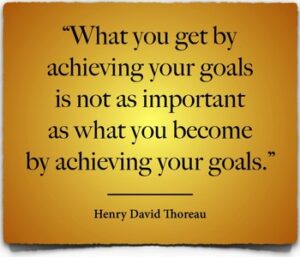
Today, I want to wish the best for you and your family, as you start the New Year afresh, with new goals, positive objectives and good things to accomplish.

It is entirely natural that men and women will reach for the stars in their efforts to achieve their best and broadest personal development. After all, we were born to create. It is in our spirit and our makeup. Aristotle identifies humans as zoon politikon – political animals, or social beings. We are that, but we are more.

We are creative beings. We put our noses to the grindstone. We use the sweat of our brow combined with the strength of our backbone and the innovation of our minds to invent, achieve and produce prosperity out of the natural resources in our environment. We are, quite literally, beings made in the image of the Divine.

We know this intuitively. Most of us find a sense of great accomplishment and joy in getting things done. In fact, work is often more rewarding when we are tackling big projects. Each of us takes great pride in carving out a living, by achieving what few others thought possible, by striving against all odds because we have an idea that we believe in.

We also know, that Man’s natural rights are not limited to the political sphere, but his natural rights have something to do with his place in the world and the stretching power of his spirit and talent.

The end of government, therefore, is to secure an individual’s freedom and provide each person with an opportunity to translate that freedom into his or her own creative growth.

Free-markets are marvelously successful because of this constant striving. There is no coercion in a free market where all transactions are voluntary. If you want tacos, t-shirts, or a Toyota, then, you get to choose.  The market provides the mechanism. Additionally, there is always room for another vendor to produce a better taco or a higher quality car at a lower price and gain additional market share.

Unfortunately, over the last 50 years, occupational licensing requirements have grown dramatically in both scope and scale. Across America, nearly one in three Americans needs the government’s permission to work.

This trend has not resulted in dramatically improved safety and quality standards, or in higher consumer satisfaction. The only thing it has accomplished has been to limit access to employment opportunities based upon needless government policy that limit competitive opportunities.

If you think about it, you don’t see consumers advocating for more stringent education and licensing schemes when a new taco truck shows up in town. Most people are just happy to see another option on the corner.

Well then, who advocates for such things? Answer: government agencies, occupational and trade associations, and professional lobbyists for business who don’t like the idea of tough, street-level competition or new market innovators.

Legislators respond by granting state boards and commissions the ability to determine licensing, education and training requirements. Yet, this doesn’t actually help people get ahead. Instead, it makes it more difficult for people to get a leg up.

In an effort to give people more freedom for advancement, more opportunities in the workplace and create more productive and prosperous environments for themselves and their families, Republican’s garnered enough momentum to pass legislation that became effective law on January 1, 2018. My Republican colleague, Senator Kim Thatcher–District 13 was a chief sponsor of the bill.

This law now designates various professional licensing boards the responsibility of considering relevant work experience in place of a high school diploma, or any other equivalent education requirements.

It also allows those licensing boards to substitute OJT – on the job training, in lieu of school attendance or class-work.

In other words, if someone without a high school diploma has been working a job for many years and the licensing or certification requires a certain education level, this bill directs the licensing board to consider their real-life experience.

There is no benefit to the state’s needless saddling of individuals or in the burdening of businesses with its intricate licensing schemes.

This bill, which is now Oregon law, recognizes the dynamic circumstances of Oregonians. We all know folks in our community who never completed high school but went straight into the workforce. They have been in their trade for quite some time and have a deep knowledge of their specific craft.

They should not be barred from advancement because they unfortunately could not finish high school or couldn’t afford college training. This new legislation will help them reach their full potential without being hampered by needless regulatory constraints.

This coming year, I hope to solve more of these regulatory roadblocks where I can gather the needed Bi-Partisan support for common-sense legislation that will allow the citizens of our state to achieve their full potential.

I look forward reducing the unseemly roadblocks that have been erected in the path of those looking for an honest day’s wage for an honest day’s work in the year ahead. Please keep me informed whenever you see some unnecessary rule blocking your path. I will strive to tear-down those obstacles to make life better for you and yours.

The purpose of government is to, “secure the Blessings of Liberty to ourselves and our Posterity.” I will continue to strive for that end, in the Senate, during 2018.

Wishing you a happy and prosperous New Year for 2018.

Remember, if we don’t stand for rural Oregon values and common-sense – No one will!

Dennis Linthicum
Oregon State Senate 28

Lump of Coal?

Oregon State Legislature sent this bulletin Wednesday, December 20, 2017 by devadmin

A pair of economists recently summarized Venezuela’s current economic situation. They noted that while Venezuela’s embrace of socialism began in the 1950s, it grew quickly during the new millennium. Their summary ended with, “Over time, the destruction of economic freedom led to more and more impoverishment and crisis.

Will our economic future be linked to this same unbridled appetite for socialism that has destroyed the Venezuelan economy?

I hate to raise this question during the Christmas season, but as I survey this past year, it is a question that deserves an answer. Given Oregon’s current fondness for tax and spend, welfare-state politicians, will the Democrat majority give it’s citizenry lumps of coal for Christmas, or their economic freedom?

Economic freedom for entrepreneurs, companies and small business owners is being  needlessly throttled by state agencies claiming the moral high-ground. That’s what socialism does. The fictional pretext for social control is always, “for the good of those at the bottom of the economic ladder.” Yet, as we see with Venezuela, it is the poor and needy who are ravaged by impoverished conditions, not the politically well-connected.

The Bureau of Labor and Industries (BOLI) is one of the sledgehammers for the progressive-left and the ruling elites in Oregon’s capital. The agency appears far too powerful for any public benefit.

You may recall the profound bias and vengeful aggravation which BOLI thrust upon Aaron and Melissa Klein, co-owners of the Portland-area bakery, Sweet Cakes by Melissa. The Kleins were forced to pay $136,927.07, by the inventive administrative bureaucrats at BOLI, for choosing not to decorate a wedding cake.

That incident is still pending appeal and the US Supreme Court recently heard testimony on a nearly identical case in Colorado where the same issue is at stake – an individuals right to serve his or her own conscience.

While there must certainly be some give and take, or a balancing act for accomplishing the ordered liberty we all desire – it does come with some friction. What must be surrendered and at what price? Our constitutionally federated Republic can only flourish when we preserve the Blessings of Liberty to ourselves and our posterity.

Our founders knew this, first and foremost. In a pamphlet dated November 1, 1787, we can see the teeter-totter balancing act expressed by Brutus as he writes a for second time. We read:

“So much, however, must be given up, as will be sufficient to enable those, to whom the administration of the government is committed, to establish laws for the promoting the happiness of the community, and to carry those laws into effect. But it is not necessary, … that individuals should relinquish all their natural rights. Some are of such a nature that they cannot be surrendered. Of this kind are the rights of conscience, the right of enjoying and defending life, etc. … To surrender them, would counteract the very end of government, to wit, the common good.” 

From Brutus’ viewpoint, individuals surrender their lone state in nature by establishing aids for securing their lives, liberties and property. Brutus continues to note that governments are made up of human beings who suffer common impulses like ambition and greed.

Meaning, the common good can be plundered by elected officials abusing power and pursuing their own self-interested gain. Brutus concludes with arguments for a Bill of Rights, to ensure that the proposed government would not forego its responsibility in securing the liberty of the people they serve.

An example: HB 3279 – Sexual Harassment and Cultural Competency

Last week, a constituent wrote to me in an e-mail describing new rules that are being placed upon her janitorial service business, which is now legislatively known as a “property services contractor.”

These rules are draped with false care and fictitious concern for her employees who, in the future, might be tormented by either serious sexual abuse, or, by simple potty mouth and sophomoric locker-room style braggadocio.

Let me be clear, from my conservative perspective, neither, the locker-room antics nor genuinely abusive behavior is acceptable. However, my worldview is antithetical to the  mind-numbing psychology of individual determinism swaddled in the modern language of former beatniks.

My worldview is based upon my, apparently, old and antiquated Biblical perspective, where respect for all persons is a given due to the fact that all people are created in God’s image and that they have been endowed by their creator with certain inalienable rights.

The statists, who desire power and control more than truth and justice, know these truths–just like you and I. They are, after-all, self-evident truths. Yet, hypocrisy reigns supreme as these grand ideals are distorted and twisted to gain political power and temporary fame via news-hour sound-bites, photo-ops and editorials of the fake-news empire.

Question – If sexual harassment and cultural competency are the foremost goals in the marble halls of Salem’s capital, then why is the educational agenda littered with the masquerade of “value-less” education within our government schools?

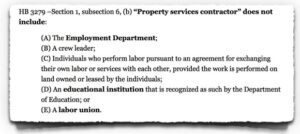
Additionally, why would HB 3279 exempt specific large-scale organizations from required compliance with these rules? Look at who is exempt:

What!?   Why not?

It strikes me as entirely disingenuous that the sanctimonious scolds among the liberal elites are not sticking up for the thousands who will NOT be protected. Their double-standards and naked hypocrisy is both frightening and appalling.

Indeed, there is more going on here than protecting Oregon’s janitorial service employees from the potential of atrocious sexual harassment in their workplaces. Part of this rule-making effort is to continue the same old lie that those in lower echelons of the economic strata need the State to care for them–because their employers won’t.

This is simply not true.

These workers are not the gray-haired and toothless washer-women out of a Dickens’ novel. Nor, are they the down-trodden and starving from some black and white propaganda piece about Lenin’s Ukraine. No, these folks are the hard working, salt of the earth type of people who keep our service centers, retail shops, accounting offices and shopping malls attractive, organized and presentable.

And, their employers are not the tawdry, despicable, vile and perverted power-brokers occupying the headlines of Hollywood. No, their employers are also hardworking Americans. They are the entrepreneurs and business owners who contract, employ, arrange, schedule and perform right beside the rest of their crew members.

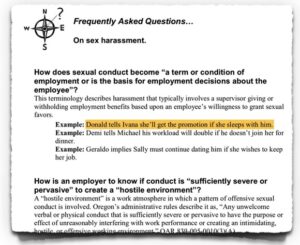
The telltale signs of BOLI’s sulfurous and petty political bias shows up in their Handbook for Oregon Property Services Contractors – Labor Contracting in the Janitorial Services Industry, you will find this on page 39:

Does the highlighted remark reflect the genuine and sincere concern of a state agency focusing on workers and their well-being? Or, does this represent the arrogant, guileful and mendacious attempt at a petty political joke?

The deceit runs deeper, too. The HTML – online version has different names in the same example so that Web Search Engine Results won’t expose the putrid disrespect and hypocrisy. The PDF version and any printed copies should be immediately redacted.

Did any of these smug bureaucrats who are filling agency documents with this trash ever consider including petty jokes about Harvey, Matt, Hillary or Barack?

Why doesn’t HB 3279 focus on sexual harassment within Hollywood production companies and their studio enterprises while they are filming in Oregon? Because… there is too much money to be succored from Hollywood.

Flyover America–the red colored counties on the electoral map–is fed -up with the relentless abuse coming from these tax and spend bureaucracies. Our communities contain the hard working folks who are drowning in the swamp of deception bubbling from the left’s unbending allegiance to total control. Agencies lobby to get vague, purely partisan, feel-good concepts passed through the legislature. (For example, HB 3279 was passed without a single Republican vote in the Oregon Senate.) Agencies then write absurdly complex rules, complete with untenable deadlines, exorbitant fees, needless paperwork and reckless disrespect for the citizens who pay their salaries and fund their benefits.

So, what are we getting under our Christmas Tree? Here, in Oregon, we are all getting stuck with a lump of coal!

Merry Christmas and Best Wishes you and your family during this Christmas Season…

Dennis Linthicum
Oregon State Senate 28
Well-Intentioned but…

Oregon State Legislature sent this bulletin Wednesday, November 22, 2017 by devadmin

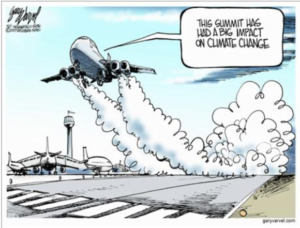
Just before leaving Oregon for Bonn, Germany and the UN Framework Convention on Climate Change (UNFCCC), Governor Kate Brown issued a couple of Executive Orders which she claimed would, “drive the state’s efforts forward in reducing greenhouse gas emissions.”

The governor’s first executive order, would require new homes built after September 2020 be equipped and ready for solar panel installation. Commercial buildings must meet the same mandate by October 2022. Additionally, by October 2022, all parking structures for new homes (this means your garage or car port) and commercial buildings must be wired for at least one electric vehicle charger.

Then, by October 2023, Gov. Brown directed the state’s Building Codes Division to require all new homes to be “zero-energy ready.”

Wow … How will this impact new home prices in a state where our “affordable housing” fuel gauge already reads, “Empty.”

These are two excellent examples of seemingly well-intentioned Executive Orders that actually harm poor, under-privileged and middle-class households while squandering valuable resources at the same time.

These building requirements impact all new construction not just new construction in prime solar gain environments. Every new home, even those shaded by tall, near-by buildings, tall evergreens, or situated on north-facing slopes will be required to purchase and install features that will never be utilized.

For the countless other homes with moderate solar gain potential, what percentage of those will utilize these “solar-ready” features? These mandates force substantial resource waste while harming a disproportionate number of poor and lower middle-class families by saddling them with associated direct costs that they cannot afford and will never use. Will Moms be forced to give up a year’s supply of bread and milk to buy a feature they’ll never use?

The Founding Fathers knew, that outside of its legitimate functions, government does nothing as well or as economically as the private sector of the economy. So, why don’t we allow voluntary, free-markets to work? To wit, if you are building a new home and want it to be “solar ready,” then make that choice, if not, then no one should force that decision on you. Why would the Governor want to force someone to buy something they don’t want or need?  This reminds me of Obama’s healthcare requirement that all males purchase maternity and prenatal health insurance even though they will never need or use this coverage.

It appears Gov. Brown’s policy interventions were made without considering the unintentional waste stemming from the one-size fits all standard. Additionally, this policy neglects simple things like possible technological innovations and market supply/demand constraints.

Meanwhile, the agencies tasked with implementing these policies will be ever diligent in doing their best to follow the rules. This becomes a situation where bureaucrats are hard at work following the flowchart and checking the boxes to ensure that they adhered to the letter of the Executive Order. All the while, the ill-defined terms of this executive mandate will lead to practical implementation problems via obtuse rules and opaque administrative procedures.

With regard to “driving the state’s efforts forward in reducing greenhouse gas emissions,” these two Executive Orders don’t really drive anything, anywhere. Rather, they will make new housing and construction more expensive, waste precious resources, and tighten existing housing markets which will adversely affect people lower on the socioeconomic scale.

As I mentioned earlier, these orders were announced just before the Governor left for the UN conference for climate initiatives in Germany.  Apparently, this was the point.

Unfortunately, the governor has fallen prey to empty sophistry and these executive efforts resemble meaningless rallying points for her gubernatorial campaign and for all  like-minded Democrats rebelling against President Trump’s withdrawal from the Paris climate accord.

Looking at news releases, the latest Bonn meetings didn’t accomplish much, either.

The greenhouse emissions from the eruption of Mount Agung, Bali weren’t addressed. Nor, were the forest fires that raged across the Western United States, or elsewhere on the planet. Additionally, the talks reported 273 gigawatts of worldwide coal capacity which is currently under construction, with another 570 gigawatts in planning stages. This would be a whopping 42 percent increase in global energy production from coal. This building boom will be necessary because the electric vehicle charging stations will have to be powered by coal, hydro or natural gas – solar power can’t meet the battery demand.

Besides, this year’s stated goal continues to be a target of keeping global temperature rise to well below 2-degree C, and 1.5-degree C if possible. This 2-degree global warming metric is the same 2-degrees that renewable energy cronies and government elites have bandied about for over 30 years.

In the US, it started with the Senate Environment and Public Works Committee hearings on June 10, 1986. The event featured testimony from numerous researchers, one of whom was James Hansen, a leading climate modeler with NASA.

In essence, Hansen, “predicted that global temperatures should be nearly 2 degrees higher in 20 years” and “the average U.S. temperature has risen from 1 to 2 degrees since 1958 and is predicted to increase an additional 3 or 4 degrees sometime between 2010 and 2020.”

Note, none of these predictions came to pass. Nor, is there substantial evidence that these conditions are imminent. Luckily, there is a nice escape hatch for being undeniably wrong.

The errors are explained away by, “the natural variability of the temperature in both real world and the model are sufficiently large that we can neither confirm nor refute the modeled greenhouse effect on the basis of current temperature trends.”

In other words, “We don’t know what we are talking about but we are here to save you; so, give us your money!”

Remember, if we don’t stand for rural Oregon values and common-sense, No one will.

Dennis Linthicum
Oregon State Senate 28
Citizen Heroes

Oregon State Legislature sent this bulletin Wednesday, November 8, 2017 by devadmin

This week we mourn alongside the community of Sutherland Springs, in Texas. This past Sunday, in a Baptist Church – 26 Christian men, women and children were senselessly murdered. My prayers are with those dealing with this horror and the loss of their loved ones, while my admonitions apply to everyone

A week earlier, we read stories of people randomly killed while on a popular bike-only path in lower Manhattan. The terrorist murderer drove a rented truck for nearly a mile down the path in the shadow of the World Trade Center, shouting, “Allahu Akbar.” In New York, the Islamic Terrorist was stopped by police as he was fleeing on foot.

However, in Texas, a brave, quick-thinking, law-abiding gun owner jumped up to save lives in his own neighborhood.

Stephen Willeford quickly rose grabbed his firearm and engaged the murderous assailant who was shooting and killing Christians while they attended a Sunday morning church.

Stephen Willeford, is not a police officer. He is not a Seal Team 6 member with advanced weapons training and skills. He is a plumber who knows how to shoot well enough to injure the killer, even though the fiend was wearing body armor.

When the killer fled the scene, at high speed, a second citizen, a rodeo bull-rider, named Johnnie Langendorf, picked up Willeford and the two of them gave chase.

These two average citizens kept the 911 dispatch officers informed as they hit speeds of 95 miles an hour.

Eventually, they directed deputies to the place where the killer had finally crashed his escape vehicle.

In a news interview, Johnnie stated that it was approximately 5 minutes before the police arrived on the scene. While awaiting the arrival of law-enforcement Willeford had his firearm trained on the killer until the police arrived.

Stephen & Johnnie are the heroes in this tragedy. These two citizen heroes saved lives, of that there can be no question.

But you know what else? — Stephen Willeford, the plumber, was also an NRA member.

He’s a card-carrying member of the NRA, while the murderer was not. Imagine that!?

So, a man who obtained a gun illegally and was not a member of the NRA attacked a church full of Christians and was stopped by an NRA trained citizen using his own personal firearm, for its legitimate purpose –– stopping evil.

This is the good-guy-with-a-gun scenario.

A trained, certified, legal gun owner intervening against a bad guy who illegally obtained a weapon he is not permitted, by gun laws, to have, or own.

It seems obvious that when a bad guy with a gun shows up the answer is always a good guy with a gun (whether that good guy is an officer of the law or a private citizen makes little difference.) The point is good guys with firearms are needed to stop bad guys with firearms.

Thankfully, two good guys showed up yesterday in Sutherland Springs.

The background check system (NICS) failed, because somewhere, somehow military records and court martial information never made it into the NICS. Even if the information had been placed into the NCIS in a timely and efficient manner, there is still no guarantee that some other avenue of illegal firearm trade wouldn’t have provided the means for the murderous ends that the perpetrator wished on these Christian Brethren.

Our 2nd Amendment rights must be protected and preserved to combat evil intentions. We must not make it harder for good people like Stephen Willeford to keep and bear arms.

Here in Oregon, we must be careful because the totalitarians in our midst will launch a full-scale gun control effort because of this tragic mass murder of 26 Americans who were enjoying church last Sunday.

In truth, our government ought to be encouraging every able-bodied citizen to not only own weapons, but be skilled and prepared in using them! In the old days, this was the case.

How many of you can remember attending classes for shooting sports on your high school campus? How many of you had your rifle or firearm in your car or hanging from the back window of your pick-up truck while you went to class?

Our American heritage as documented in our Constitution’s Second Amendment did not spring into existence from another galaxy. It has a long history, founded in natural law, experience and philosophy. Across the old and new worlds, the notion of an armed populace as a means of securing human freedom was well documented in historical fact and legal tradition.

Many of our nation’s Founders were well studied in legal tradition and most of them would have read William Blackstone’s Commentaries on the Laws of England (1765–1769). Blackstone’s first volume elaborates on the three grand, absolute rights. First, every human’s right to life and personal security. Second, an inherent right which consists of the power to act as each one thinks fit – personal liberty. The third grand right is the “sacred and inviolable rights of private property,” the ability to own and use private property for one’s own purposes.

Blackstone covers several means of securing and protecting these rights, noting, “The fifth and last auxiliary right of the subject, … is that of having arms for their defense, suitable to their condition and degree, and such as are allowed by law.”

In closing, historical experience tells us that, “when the sanctions of society and laws are found insufficient to restrain the violence of oppression,” our natural rights for freedom and self-preservation cannot be denied. These basic rights belong to everyday, average citizens. Citizens just like Stephen, Johnnie, you and I.

Remember, if we don’t stand for rural Oregon values and common-sense – No one will!

Regards,

Dennis Linthicum
Oregon State Senate 28

Smoking Marshmallows

Oregon State Legislature sent this bulletin Wednesday, November 8, 2017 by devadmin

When you think about Thanksgiving, what is the first thing that enters your mind?

For most people, it is probably some sort of food – moist turkey breast, buttery mashed potatoes, brown sugar-glazed sweet potatoes (you know… with smoking marshmallows on top,) or pumpkin pie with a dollop of whipped cream.

Or, you might have thoughts about family or friends that you haven’t seen for a long time, how to decorate the house, or how to get where you’re going without getting stuck in traffic.

Once Thanksgiving Day is here and family and friends begin to arrive, then, there will be conversations, topics of discussion, stories to share and catching up to do.

However, I’ll guess that too few of us have our immediate thoughts turn toward being thankful.

Being thankful should be an all-consuming attitude, but it rarely is. Our lives are too busy for that. And, there is so much work to be done. We get tangled in the tyranny of the urgent while ignoring the simple things that fill our days and give purpose to our lives.

A thankful attitude begins with our own humble recognition of where we came from and what our short-comings might be. During moments of reflection, thankfulness shows up as the genuine respect and heartfelt gratitude for those who have impacted our lives.

While we are thankful for the material things we possess we should be most thankful for the people and the intertwining relationships that they bring into our lives.  Although we might say, “I’m thankful for my car,” what we mean is, “I’m thankful to those who purchased, repaired, provided for, or loaned me the car that I drive.” This is true even if you bought and paid for your own car, because you are employed by someone (even yourself), you provide for your customers who purchase the goods or services that you supply. They, in turn, reward your life with the results from their endeavors.

In Johannes Althusius’ famous treatise of 1614, Politica, Althusius describes his understanding of the community as a harmonious ordering of natural associations. Certainly, the family comes first in this community, but there is a host of dependent associations that can’t be overlooked. He identifies God as the first cause of all our relationships and the family as the most natural and important of all human associations. Any other associations or unions grow from these first relationships. He writes,

“Truly, in living this life no man is self-sufficient, or adequately endowed by nature. For when he is born, destitute of all help, naked and defenseless, as if having lost all his goods in a shipwreck, he is cast forth into the hardships of this life, not able by his own efforts to reach a maternal breast, nor to endure the harshness of his condition, nor to move himself from the place where he was cast forth. By his weeping and tears, he can initiate nothing except the most miserable life, a very certain sign of pressing and immediate misfortune.”

Althusius continues,

“Bereft of all counsel and aid, for which nevertheless he is then in greatest need, he is unable to help himself without the intervention and assistance of another. Even if he is well nourished in body, he cannot show forth the light of reason. Nor in his adulthood is he able to obtain in and by himself those outward goods he needs for a comfortable and holy life, or to provide by his own energies all the requirements of life. The energies and industry of many men are expended to procure and supply these things.”

It is no accident that this continent’s first settlers joined together with their immediate community to offer thoughts of thanksgiving to their God, their families, their friends, co-workers, and associates. These celebrations of old are simply the natural outgrowth of a moment of common reflection. Any reasonable assessment of our own skills, abilities, and habits would lead each of us to a thankful understanding for those who daily intervene in our lives.

This is a small variation of the circle of life, where each person voluntarily contributes to the health and well-being of the community through open and free access to the marketplace.

Adam Smith described this in his book, the Wealth of Nations, (1776). Smith mentions the useful efforts of workmen and women in the marketplace. He then jolts us with the realization that the market place does not need altruistic motives to meet the needs of the community. Smith’s narrative explains that it is not from sheer benevolence that the butcher, brewer or baker provides us with our steak, beer and bread. But, rather, they provide these services from regard for their own family’s interests. Their goods and services are needed and enjoyed by the community and in return, these entrepreneurs receive monies to supply their own family’s needs.

In one of President Abraham Lincoln’s Proclamations for Thanksgiving, he states,

“The year that is drawing towards its close has been filled with the blessings of fruitful fields and healthful skies. To these bounties, which are so constantly enjoyed that we are prone to forget the source from which they come, others have been added, which are of so extraordinary a nature, that they cannot fail to penetrate and soften even the heart which is habitually insensible to the ever-watchful providence of Almighty God.”

I hope this year, you too, get the opportunity to reflect and share in a bountiful Thanksgiving celebration.

Remember, if we don’t stand for rural Oregon values, common-sense and our great American Traditions – No one will!

Dennis Linthicum
Oregon State Senate 28
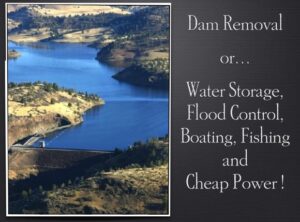
My Dam Letter to Ryan Zinke

Oregon State Legislature sent this bulletin Wednesday, November 1, 2017 by devadmin

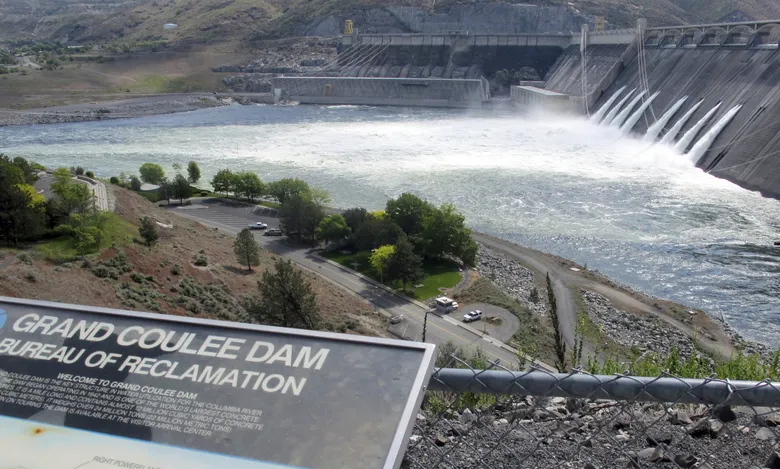
Recently, Congressman LaMalfa (CA-R) hand-delivered constituent letters to a meeting with Secretary of Interior, Ryan Zinke. The bundle of letters expressed strong opposition to removing the four Klamath River hydro-electric generating facilities.

You may also submit your own comments regarding dam removal to the Federal Energy Regulatory Commission (FERC)

1. Go to https://ferconline.ferc.gov/quickcomment.aspx

2. Enter your information including e-mail. Open automatic e-mail from FERC, follow link from there to submit comment.

3. In the Docket field, enter P-2082-062 to specify the project.


My own letter to Secretary Zinke is included below, for your perusal:


Department of the Interior

Secretary Ryan Zinke

1849 C Street, NW

Washington DC  20240

Re: Klamath River Dam Removals

October 20, 2017

On October 17, 2016, President Obama’s Secretary of the Department of the Interior (DOI), Sally Jewel, submitted a recommendation to the Secretary of Federal Energy Regulatory Commission (FERC) advocating for the removal of four hydroelectric facilities on the Klamath River.

Jewel’s recommendation is diametrically opposed to the opinions of my constituents, in Southern Oregon. Nearly 80% of voters in Klamath County, Oregon and Siskiyou County, California, where the dams are located, expressed their strong opposition to destroying these four important facilities. These dams currently provide a consistent supply of low-cost, renewable, hydro-electric base-load grid-power.

Jewel writes, “While these dams brought prosperity to many, their construction came at a steep cost to tribes and fishing communities. The returning runs of salmon repeatedly bludgeoning themselves against the new dam walls were a harbinger of a declining fishery that cast a cloud over those who, for millennia, have called the Klamath home.”

These statements are all misleading. First, the dams not only brought prosperity to the region, but they continue to bring prosperity to all people groups throughout the Pacific Northwest. Throughout Oregon and the Northwest, enormous percentages of electrical grid supply is provided by the inexpensive, run-of-river hydro-electric generation facilities in the region.

Second, I would suggest that salmon are not “bludgeoning themselves” against existing dam structures that have been in place for over a half-century. School children know that salmon return to the place where they were hatched to spawn. This means that scores of generations and millions and millions of salmon have never tried to swim past the dams. Also, fish ladders currently exist to help native fishes return to their spawning grounds and they have been successfully navigating these waters for decades.

Third, the problems associated with enormous volumes of sludge accumulated behind the dam structures ought to be a genuine concern for future generations of salmon, trout, aquatic wildlife and river habitat. The Draft Environmental Impact Statement did not address or investigate mitigation efforts that might be required to handle the potential damage from the estimated 20 million cubic yards of accumulated sediment. This issue is not easily side-stepped because it is an equivalent 2 million ten-yard dump truck loads of silt, sediment and sludge which will be dumped into the river system. Surely, the existing downstream salmon fisheries will bear the burden from this harmful sludge.

Fourth, “the greatest harbinger of a declining fisheries which might cast clouds over” those who live, work, and play in the Klamath region needs to be correctly identified. It isn’t dams. Rather, like the rampant wolf population explosions in Montana, the salmon declines are directly related to federal policies.

The passage of the Marine Mammal Protection Act (MMPA) in 1972 committed the United States to long-term management, conservation, and moratoriums on taking marine mammals, like the seals, sea lions and porpoises. Studies by the National Oceanic and Atmospheric Administration (NOAA) have documented the enormous growth in sea lion populations and the negative impact that seals and sea lions have on free swimming salmonids in rivers and estuaries in the Northwest.

This is no small matter. The sea lion population has ballooned to over 300,000 mammals in the Pacific Northwest. Each adult lion consumes nearly 18 pounds of fish per day. This equates to a take of nearly one million tons of fish annually.

Additionally, salmon are a transpacific anadromous species that spends between three and five years in the Pacific Ocean migratory patterns before returning to their spawning grounds. During this time in the open ocean uncontrolled foreign fishing fleets have years of unfettered access to these fish populations.

Therefore, the dams are not the problem.

The salmon populations have been thriving while the dams have been in place. The dams provide inexpensive, renewable electricity, flow control for watershed volume and temperature, recreation and agricultural reservoir capacity, and Forest Service fire suppression storage in the extremely remote regions of Northern California and Southern Oregon.

Decommissioning and removing the dams owned by PacifiCorp is not about the river, its cultural significance, jobs, race, ag-business, or water. Rather it’s a potpourri of special interests, rent-seekers disguised as noble businessmen, enlarged bureaucratic dominion and strategically manipulated environmental emotions

I humbly ask for your consideration of the items I have enumerated here and the evidence that has been accumulated by the investigating agencies. I also suggest that a willingness to listen to the constituents who have lived, worked and invested their lives in the Klamath River watershed should play an important role in your determination.

In closing, as a State Senator representing Southern Oregon, my constituents have made their voices clear. The dams are viable economic assets that taxpayers have funded. Destroying these resources will not contribute to Making America Great Again.

Therefore, my request is that the Bureau of Reclamation (BOR) deny the decommissioning of the four dams within the Klamath River system.

Sincerely,

Dennis Linthicum
Oregon State Senate 28
Dam Letter

Oregon State Legislature sent this bulletin sunday, February 1, 2017, by devadmin

Recently, Congressman LaMalfa (CA-R) hand-delivered constituent letters to a meeting with Secretary of Interior, Ryan Zinke. The bundle of letters expressed strong opposition to removing the four Klamath River hydro-electric generating facilities.

You may also submit your own comments regarding dam removal to the Federal Energy Regulatory Commission (FERC)

1. Go to https://ferconline.ferc.gov/quickcomment.aspx

2. Enter your information including e-mail. Open automatic e-mail from FERC, follow link from there to submit comment.

3. In the Docket field, enter P-2082-062 to specify the project.


My own letter to Secretary Zinke is included below, for your perusal:


Department of the Interior

Secretary Ryan Zinke

1849 C Street, NW

Washington DC  20240

Re: Klamath River Dam Removals

October 20, 2017

On October 17, 2016, President Obama’s Secretary of the Department of the Interior (DOI), Sally Jewel, submitted a recommendation to the Secretary of Federal Energy Regulatory Commission (FERC) advocating for the removal of four hydroelectric facilities on the Klamath River.

Jewel’s recommendation is diametrically opposed to the opinions of my constituents, in Southern Oregon. Nearly 80% of voters in Klamath County, Oregon and Siskiyou County, California, where the dams are located, expressed their strong opposition to destroying these four important facilities. These dams currently provide a consistent supply of low-cost, renewable, hydro-electric base-load grid-power.

Jewel writes, “While these dams brought prosperity to many, their construction came at a steep cost to tribes and fishing communities. The returning runs of salmon repeatedly bludgeoning themselves against the new dam walls were a harbinger of a declining fishery that cast a cloud over those who, for millennia, have called the Klamath home.”

These statements are all misleading. First, the dams not only brought prosperity to the region, but they continue to bring prosperity to all people groups throughout the Pacific Northwest. Throughout Oregon and the Northwest, enormous percentages of electrical grid supply is provided by the inexpensive, run-of-river hydro-electric generation facilities in the region.

Second, I would suggest that salmon are not “bludgeoning themselves” against existing dam structures that have been in place for over a half-century. School children know that salmon return to the place where they were hatched to spawn. This means that scores of generations and millions and millions of salmon have never tried to swim past the dams. Also, fish ladders currently exist to help native fishes return to their spawning grounds and they have been successfully navigating these waters for decades.

Third, the problems associated with enormous volumes of sludge accumulated behind the dam structures ought to be a genuine concern for future generations of salmon, trout, aquatic wildlife and river habitat. The Draft Environmental Impact Statement did not address or investigate mitigation efforts that might be required to handle the potential damage from the estimated 20 million cubic yards of accumulated sediment. This issue is not easily side-stepped because it is an equivalent 2 million ten-yard dump truck loads of silt, sediment and sludge which will be dumped into the river system. Surely, the existing downstream salmon fisheries will bear the burden from this harmful sludge.

Fourth, “the greatest harbinger of a declining fisheries which might cast clouds over” those who live, work, and play in the Klamath region needs to be correctly identified. It isn’t dams. Rather, like the rampant wolf population explosions in Montana, the salmon declines are directly related to federal policies.

The passage of the Marine Mammal Protection Act (MMPA) in 1972 committed the United States to long-term management, conservation, and moratoriums on taking marine mammals, like the seals, sea lions and porpoises. Studies by the National Oceanic and Atmospheric Administration (NOAA) have documented the enormous growth in sea lion populations and the negative impact that seals and sea lions have on free swimming salmonids in rivers and estuaries in the Northwest.

This is no small matter. The sea lion population has ballooned to over 300,000 mammals in the Pacific Northwest. Each adult lion consumes nearly 18 pounds of fish per day. This equates to a take of nearly one million tons of fish annually.

Additionally, salmon are a transpacific anadromous species that spends between three and five years in the Pacific Ocean migratory patterns before returning to their spawning grounds. During this time in the open ocean uncontrolled foreign fishing fleets have years of unfettered access to these fish populations.

Therefore, the dams are not the problem.

The salmon populations have been thriving while the dams have been in place. The dams provide inexpensive, renewable electricity, flow control for watershed volume and temperature, recreation and agricultural reservoir capacity, and Forest Service fire suppression storage in the extremely remote regions of Northern California and Southern Oregon.

Decommissioning and removing the dams owned by PacifiCorp is not about the river, its cultural significance, jobs, race, ag-business, or water. Rather it’s a potpourri of special interests, rent-seekers disguised as noble businessmen, enlarged bureaucratic dominion and strategically manipulated environmental emotions

I humbly ask for your consideration of the items I have enumerated here and the evidence that has been accumulated by the investigating agencies. I also suggest that a willingness to listen to the constituents who have lived, worked and invested their lives in the Klamath River watershed should play an important role in your determination.

In closing, as a State Senator representing Southern Oregon, my constituents have made their voices clear. The dams are viable economic assets that taxpayers have funded. Destroying these resources will not contribute to Making America Great Again.

Therefore, my request is that the Bureau of Reclamation (BOR) deny the decommissioning of the four dams within the Klamath River system.

Sincerely,

Dennis Linthicum
Oregon State Senate 28
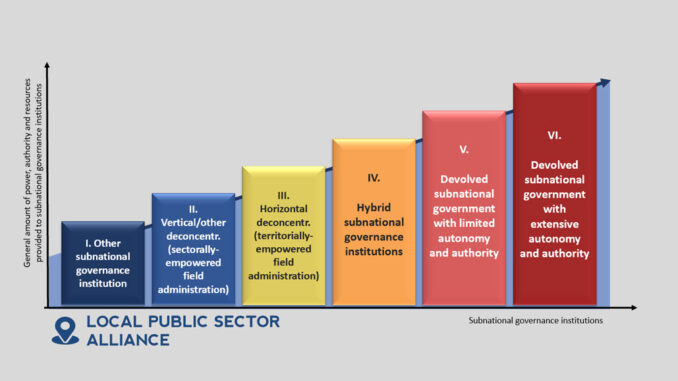
Power of Local Rule

Oregon State Legislature sent this bulletin Friday, October 20, 2017 by devadmin

I just touched down in Klamath County after a whirl-wind tour in Washington, D.C. I had two big items on my scheduled agenda. The first was appointments with Rep. Greg Walden and several other House members regarding land, forest, habitat and watershed policies that greatly impact our Western States. Rep. Walden has been deeply involved in efforts to improve how our federal forests are managed and he led several calls for forest management reform. The Congressional Western Caucus, joined in, stressing the need for Congress to fix the broken federal policy that leads to catastrophic fires in Oregon and much of the West.

Second, I was in D.C. to participate in the final sessions of the Legislative Energy Horizon Institute (LEHI) conference. I’ll circle back to this topic later.

At the capital, I met with staff members from the Department of Interior (DOI) Committee on Natural Resources. I also met with the Liaison Office of Intergovernmental Affairs dealing with the Bureau of Indian Affairs (BIA) and federal policy regarding the DOI. Lastly, Chairman Bishop’s Committee on Natural Resources provided staff time with the Water, Power and Oceans Subcommittee.

Topics of discussion ranged from water rights, access and quality to fire management on lands managed by the Bureau of Land Management (BLM). (Fire management for US Forest Service land is under the US Department of Agriculture (USDA) not the DOI.)

Another topic was the upcoming quandary over the needless removal of four perfectly viable dams on the Klamath River. Congressman Doug LaMalfa, who represents Modoc and Siskiyou Counties, in California, will hand deliver your letters to Interior Secretary Ryan Zinke regarding the destruction of our Klamath River dams. (Email your letters, this weekend, to Congressman LaMalfa’s representative Erin Ryan.)

Lastly, while in D.C., I stressed the need for the feds to clean-up the regulatory processes that get foisted on the states and private sector by federal agencies like the Environmental Protection Agency (EPA).

Most of the staff members I encountered were new to their respective organizations and are bringing fresh, new and innovative ideas to the President’s administration. A fresh set of unbiased eyes should always be welcome.

I found it encouraging that there was a universal optimism about lessening the regulatory constraints stemming from federal agencies. I was also assured that an overall policy shift would give increased emphasis to the local officials and the local decision making process. This shift will certainly provide greater assurances for the public and provide better protection for life, health, and local safety concerns.

This is the most important issue.

For our benefit, a historical reference was noted by founder, Thomas Jefferson:

“the crown deprived the body of the peo­ple of this power of local rule, and vested it in a small num­ber of per­sons… In this way, the ancient free­dom of the munic­i­pal­i­ties was under­mined, and the power of the rul­ing classes was installed in its place.” (The His­toric Ori­gin of the Con­sti­tu­tion of the United States, p. 150)

Two other items that surfaced in our discussion, were specifically tied to the EPA. First was the elimination of the current “Sue and settle” process and the resulting mandates that occur outside the regulatory process. Special interest groups and their high-priced attorneys have used lawsuits to force federal agencies – especially EPA – to issue regulations that advance their own interests and priorities. Following the suit, the courts compel agencies to take steps, either through changes in a statutory duty or enhanced enforcement timelines. Essentially, agencies must acquiesce to the courts consent decree or settlement agreement, which in-turn affects the agency’s obligations.

This means that a judge’s opinion forces an agency to take action that is not a mandatory requirement under its governing statute. This clearly violates the court’s authority, the separation of powers and eliminates any need for legislative bodies. Additionally, since these changes come through the court system they are shielded from public review and carry an unwarranted legitimacy. In the end, these settlements cost the American taxpayer millions of dollars.

Second, was the rollback of the Clean Power Plan (CPP). Last Monday, the head of the EPA announced that he would sign a new rule overriding the Obama-era effort to essentially destroy America’s coal-fired electrical energy sector. EPA administrator Scott Pruitt declared, “The war on coal is over.” The current policy’s strict limitations on carbon emissions from coal-fired power plants would make coal too expensive as a base load generation source.

According to the Energy Information Administration, in the past decade, coal-fired energy production has declined from 49% to 30.4% of US energy production. The Trump administration’s efforts will limit the speed at which our nation’s coal energy production declines, but the declines will continue due to gains in natural gas availability, as seen in the graphic below.

Following these meetings, I attended the LEHI conference which shed light on all aspects of our nation’s energy grid. Coal-fired power-plants, hydro-facilities, wind and solar farms, geo-thermal sources, natural-gas powered turbines and nuclear energy resources were all part of the curriculum.

LEHI is designed to educate state legislators on the North American energy infrastructure and delivery system. High turnover in state legislative bodies hampers the long-term institutional knowledge concerning complex energy issues in states and provincial legislatures. The conference was designed to fill-the-gaps for legislators who are responsible for developing state energy policy yet often lack a comprehensive understanding of how the existing energy infrastructure operates.

Experts discussed the technological pros and cons of the each of these technologies, their current markets, capital incentives, regulatory hurdles and tried to align them with projected grid requirements for North America. The bottom-line is, for local rule to be effective, prudence and wisdom must prevail in our public policy debates. Then, we can positively impact our standards of living and our business successes.

This dilemma is fast approaching Oregon’s energy horizon, but, that’s a conversation for next week. Until, then…

Remember, if we don’t stand for rural Oregon values and common-sense – No one will!

Best Regards,

Dennis Linthicum
Oregon State Senate 28