How to Find God’s Glory in a Good Book – Trochia

Oregon State Legislature sent this bulletin sunsday, september 30, 2020 by devadmin

In my last article about Biblical Truth and Careful Reading, I wanted to spark your interest in good books, authors, and your own personal meditation on the things that you read. God’s glory is all around us and we can discover it more readily if we read, meditate, discuss, share and live according to Biblical principles.

In Romans we read that God’s glory can be clearly seen throughout the world. The Apostle Paul writes:

“… because what can be known about God is plain to them, because God has made it plain to them. For since the creation of the world his invisible attributes – his eternal power and divine nature – have been clearly seen, because they are understood through what has been made. So people are without excuse.” (Romans 1:19-20)

If this is a true claim, that, “God is not hidden and God’s invisible attributes can be seen,” then it seems that Scripture is telling us that God is able to be discovered, so finding Christ in every facet of our lives shouldn’t be as hard as we might think.

Could it be that Biblical truth is, indeed, everywhere? Could it be that you and I are simply unfocused or too distracted to see it?

Our culture is constantly bombarding us with ungodly messages via the Internet, TV, magazines and movies, so becoming distracted is all too easy. One of the ways that I think we can learn to look for the divine in the midst of the seemingly mundane is by measuring our Biblical knowledge through our reading. Reading quality literature allows us to turn our focus back towards those things that are true, good, and beautiful. You might be wondering, how? And, why books?

When reading a book, you are in charge. You become the director; you control the flow, tempo, volume, and texture of the voices. The author provided the details, but you’re in charge now. You get to tell the story. Think of a story told in movie, or video format. It will be told through the director’s eyes. It will be told with the speed, tempo and music that he envisions.

When you read a book that connection becomes your intimate opportunity. You gain control. You get to slow down, meditate and reflect on the characters in the story, and this is extremely important. This is where we avoid conforming to the patterns of this world and become transformed by the renewing of our minds (Romans 12:2). Our desire should be to fit every loose thought, emotion and impulse into the structure of life shaped by Christ (2 Corinthians 10:5). You can accomplish this by using God’s Word to help focus your mind as you contemplate what you’ve read.

After you’ve read a bit, stop and think about the characters, their circumstances and their interactions. Why did they say what they said? What decisions were made and why? How do you see God working in the story, even when there is no allusion to God’s active involvement? Do you see honor, integrity, or fallenness?

Take for example, Daniel Defoe’s Robinson Crusoe, a story oft mistaken as a children’s book. In the very first chapter, our hero describes his dilemma, “in which I do not heed my father’s advice”:

“[Facing perplexing circumstances] …my head began to be filled very early with rambling thoughts… my inclination… led me so strongly against the will, nay the commands of my father, and against all the entreaties of my mother and other friends…

“But one day… I went casually, and without any purpose… I consulted neither father or mother… without asking God’s blessing, or my father’s, without any consideration of circumstances or consequences, and in an ill hour, God knows.”

Now, in your mind’s eye, try to recall memories that echo these circumstances – self-centered desire and will, wise counter-counsel, obstinacy or casual enticement without appropriate consideration. Are these events similar, or dissimilar, to anything you’ve experienced? Do these words describe a friend or family member’s recent situation?

Defoe’s crisp moral insights provide us with a timeless perspective encased in an engaging story. In fact, these paragraphs could easily be used to describe any of us in high school, or college. Or, maybe these words fit an episode in your life where you are currently perplexed.

Our goal should be to interpret what we read through a Biblical framework. We should think critically about the stories we hear and read through the prism of God’s Word.

For example:

Can you relate these paragraphs to any Bible verse?
Any from the New Testament?
Any from the Old Testament?
In your reading, do you recognize characters that relate positively to Biblical truth?
Do you find any encouragement in the realization that others have faced the same spiritual struggles that we face today? (Young Crusoe, in the mid-1600’s, faced dilemmas familiar to each of us.)
Your thoughts are worth sharing and discussing. Are you willing to engage others?
Even young Crusoe meditates on his experience, which I’m sure many of us can relate to, and he recounts his thoughts, as follows:

“I began now seriously to reflect upon what I had done, and how justly I was overtaken by the judgment of Heaven for… leaving my father’s house, and abandoning my duty; all the good counsel of my parents, my father’s tears and my mother’s entreaties came now fresh into my mind, and my conscience, which… reproached me with the contempt of advice, and the breach of my duty to God and my father.”

By reading a fictional story about a headstrong young man and his adventures at sea, I found pieces of wisdom regarding thoughts that I could take captive to Christ. These observations, in turn, become powerful reminders of my own personal journey as a believer.

I challenge you to give it a try with a good book. Endeavor to see Him in everything. Try using literature as a tool for focusing your thoughts and looking for God’s glory in all things. Then, watch and see how your view of the world changes. Your journey, relationships and conversations should reflect transformative qualities when seen in the light of His attributes.

In my next post, I’ll help you walk through more of these truths by using other illustrations from timeless literature. Along the way, remember to share your thoughts with others, as we continue this journey together, discovering the mind of Christ in all that we encounter.

Heart-warming or Dirty?

Oregon State Legislature sent this bulletin Wednesday, February 5, 2020 by devadmin

I recommend that you read a couple of paragraphs from President Trump’s State of the Union:

“As the world bears witness tonight, America is a land of heroes. This is a place where greatness is born, where destinies are forged, and where legends come to life. This is the home of Thomas Edison and Teddy Roosevelt, of many great generals including Washington, Pershing, Patton, and MacArthur. This is the home of Abraham Lincoln, Frederick Douglass, Amelia Earhart, Harriet Tubman, the Wright Brothers, Neil Armstrong, and so many more. This is the country where children learn names like Wyatt Earp, Davy Crockett, and Annie Oakley. This is the place where the pilgrims landed at Plymouth and where Texas patriots made their last stand at the Alamo.”

“The American nation was carved out of the vast frontier by the toughest, strongest, fiercest, and most determined men and women ever to walk on the face of the Earth. Our ancestors braved the unknown; tamed the wilderness; settled the Wild West; lifted millions from poverty, disease, and hunger; vanquished tyranny and fascism; ushered the world to new heights of science and medicine; laid down the railroads, dug out the canals, raised up the skyscrapers. And, ladies and gentlemen, our ancestors built the most exceptional republic ever to exist in all of human history, and we are making it greater than ever before.”

“This is our glorious and magnificent inheritance. We are Americans. We are pioneers. We are the pathfinders. We settled the New World, we built the modern world, and we changed history forever by embracing the eternal truth that everyone is made equal by the hand of Almighty God. America is the place where anything can happen. America is the place where anyone can rise. And here, on this land, on this soil, on this continent, the most incredible dreams come true. This nation is our canvas, and this country is our masterpiece. We look at tomorrow and see unlimited frontiers just waiting to be explored. Our brightest discoveries are not yet known. Our most thrilling stories are not yet told. Our grandest journeys are not yet made. The American Age, the American Epic, the American adventure has only just begun.”

“Our spirit is still young, the sun is still rising, God’s grace is still shining, and, my fellow Americans, the best is yet to come. Thank you. God bless you. And God bless America.”

President Trump’s message should have been heard as a heart-warming tribute to all Americans and our collaborative efforts to build a nation where people are free to pursue individual liberty. But all is not well in DC because the final scene from the televised event was Nancy Pelosi tearing up her copy of the speech.

I’m not suggesting that Trump’s speech should have been gold-leafed, framed and placed in Pelosi’s living room. Yet, we know that her purposeful televised shredding of those papers was meant to be divisive. When questioned about her actions she responded that she thought the speech “dirty.” Pelosi said, “I tore it up. I was trying to find one page with truth on it. I couldn’t.”

Given these two contradictory views for America, how do you think Speaker Pelosi would answer the following question? Which form of government would she prefer? Which would you prefer? Choose one, A or B:

A) People should govern government; or,

B) Government should govern people.

Now, back to Oregon, how do you think our Democrat-party super majority enclave would respond?

The reason I ask, is because of a much larger battle that is being waged across America.  It is a battle for ultimate control – control over the life of the individual.

Will the individual (AKA – the smallest possible minority) be allowed to run their own life? Or, will the powerful continue to manage, control, regulate, fine and tax that life for their own benefit?

Based upon the initiatives that were brought up during Oregon’s 2019 legislative session and the wave of new bills scheduled during this 2020 short “fix-it” session, the super majority’s appreciation for big government is undeniable.

The onslaught facing Oregonians is similar to a scene described by Homer, in his legendary masterpiece, the Iliad. He writes, “It is as when the ass breaks into a field and eats the standing corn, and the children of the village beat him with sticks. Their arms are weak, and the sticks are broken on the beast’s back, for he is slow in going, nor do they drive him out till he has eaten his fill.”

I wonder if this donkey will ever be full. Probably not…

Oregon’s super majority appears unconcerned about the growth of government and its own internal agencies that multiply faster than rabbits. Every session new organizational units are conceived on a bed of Utopian ideals. While each of these agencies has a limited scope and function, when administered in concert with thousands of other rules and regulations liberty becomes debauched.

The tangled web of controls, economic dislocations, and market interventions are skillfully crafted to lavish rewards on one group while taking from another. This is nothing more than robbing Peter to pay Paul. The well-connected receive their rewards in the form of projects, contracts, licensure, subsidies, protective regulations and monopolistic franchises that ensure the well-connected stay gorged at the honeypot.

Aided by well-heeled experts and powerful special interests, the onslaught of government growth is slowly dismantling our private property rights, local jurisdictional autonomy, independent decision-making and free-market choices. The result is a more virulent collectivism which demands higher tax rates, subservience to needless regulations and sacrifices of our individual freedom in the name of safety and security.

The aftereffect of this degraded liberty forces other businesses to lobby for their own legislative protections, or advantages. In turn, you, I, our families and our businesses are being slowly divided into groups of rulers or ruled, taxers or taxed.

Remember, Thos. Jefferson, cautioned the majority of his era with this message, “to be rightful, [they] must be reasonable.” Because, “the minority possess their equal rights, which equal laws must protect, and to violate which would be oppression.

Now the question facing us is, how reasonable is the super majority?

Are they being reasonable with regard to gun control (must be locked at all times, can’t hand to another user, etc.), cap and trade (11% utility rate increase; 72¢ gas tax), mandatory vaccinations (for restrictable diseases), gross sales taxes (CAT), mattress taxes (for the homeless), auto-sales  taxes (for carbon-offsets), privilege taxes, hotel taxes (20% increase while renting a pillow), home-sales taxes, and new construction taxes?

Does the state of Oregon need more revenue? On the contrary, Oregonians need more freedom! Freedom from excessive taxation, regulations, fees, redundant licensure requirements and government agencies interfering in their families and businesses.

Our Oregon Constitution echoes this thought claiming, “all power is inherent in the people, and all free governments are founded on their authority, and instituted for their peace, safety, and happiness.” Government’s charter is for the expressed defense, support and protection of the individual along with all of his undeniable, self-evident natural rights and human dignity. The state, in our Founder’s conception, is meant to be the servant of the individual.

Join me and thousands of hardworking, law-abiding, Oregonians at the Capital building, all-day tomorrow morning, Thursday, February 6th.

Join with us to rally peacefully, stand up for our 2nd Amendment Rights, our private property rights, our right to run our own lives and businesses, our rights to earn an honest living for our families and our futures without punitive taxes, fees, and regulatory burdens.

Remember, if we don’t stand for rural-Oregon values and common sense… No one will!

Dennis Linthicum
Oregon State Senate 28

Land of Liberty?

Oregon State Legislature sent this bulletin sunday, april 1, 2019, by devadmin

Every perceived problem seems to get a new law drafted. The state tries to mandate solutions to even the smallest problems. Yet, their solutions rarely work as intended.

People aren’t allowed to solve their own problems they are forced to depend on the state’s bureaucratic experts. In turn, the individual is diminished, while the state is emboldened. Civic responsibility is weakened, and the quality of community and family-life is eroded.

C.S. Lewis noted in his preface to the Screwtape Letters, that we,

live in the Managerial Age, in a world of ‘Admin.’ The greatest evil is not now done in those sordid ‘dens of crime’ that Dickens loved to paint. …  it is conceived and ordered (moved, seconded, carried, and minuted) in clean, carpeted, warmed and well-lighted offices, by quiet men with white collars and cut fingernails and smooth-shaven cheeks who do not need to raise their voices.”

Lewis goes on to describe how his symbolism pictured, “an official society held together entirely by fear and greed.”  In essence, fear of the government’s regulations (and its regulators), with their ever-growing threats of fines and/or imprisonment causes people to be protective, suspicious and secretive. After all, who can know what traps have been set?

In the Senate Judiciary Committee, on April 2, a slew of anti-Second Amendment proposals is scheduled for public hearing.  These proposals are trumpeted as “necessary” for “safety”, but we all know that’s a ruse. In this case, the forty-four-page amendment to SB 978 is an full-scale barrage against the Second Amendment including a backdoor ban on concealed carry.

This law violates the inalienable right of all Oregonians to defend themselves and their families. Disarming law-abiding citizens is inviting violence into our communities and our homes. Gun-free zones are invitations to mass shootings and attacking law-abiding Oregonians isn’t going to make anyone safer. In fact, it will put us in danger. I will not compromise on the Second Amendment.

Gun-Grabber Day is Tuesday, April 2

SB 978, on Tuesday, April 2nd, will focus on a myriad of issues regarding possession, personal firearm management, and the buying, storing and selling of firearms. If you value your firearms and your Second Amendment right to keep and bear arms, then please get involved.

(Click here for Location and Agenda)

Send an email to every Democrat in the House and Senate. Phone every Democrat in the House and Senate. The pro-Second Amendment Republicans are in the minority and we will need a few Democrats to vote with us in order to stop these bills. Light up their phones and clog their inboxes with emails, otherwise there is great potential that we will slowly lose our legal protections regarding our Constitutional Rights.

Necessity is the plea for every infringement of human freedom.

It is the argument of tyrants.

It is the creed of slaves.

— William Pitt, in the House of Commons – November 18, 1783

Remember, if we don’t stand for rural Oregon values and Common-sense – 
No one Will.

Best Regards,

Dennis Linthicum
Oregon State Senate 28

Saving Thousands of Millions

Oregon State Legislature sent this bulletin Wednesday, january 2, 2019, by devadmin

Johnson continued, “He that is extravagant will quickly become poor, and poverty will enforce dependence and invite corruption.”

Frugality, in the dictionary, is simply economy. For the individual this means exercising prudent techniques for saving so that resources are not wasted but used judiciously to serve the most appropriate hierarchy of needs without needing to beg or borrow.

For our state, the definition would apply; except, the sources of revenue would no longer be classified as voluntary contributions (begging or borrowing) but would become forced contributions through taxation and debt-bonding.

Likewise, the state that is extravagant or wasteful will quickly impoverish itself and its citizens. Additionally, in their poverty, the citizens will be forced into dependence and the state will experience corruption throughout its domain.

Let’s look at some numbers. During the 2015-17 biennium, Oregon’s Department of Administrative Services (DAS) processed nearly $8 billion worth of procurement services. That’s big money! That is 8,000 million dollars’ worth of goods and services. Wow! Especially when you consider that Oregon only has 4.1 million residents.

That’s right! Oregon spent 8,000 million dollars on 4.1 million people. That’s just under $2,000 of stuff for every man, women and child of every category, background, country of origin, make or model.  That’s just stuff; the total outlay for all goods, services, salaries, wages and benefits came to about $9,100 in 2016, on a per capita basis.

On the other-side of the accounting ledger Oregon only collected $2,700 in taxes on a per capita basis. This is what any normal person would call living beyond one’s means. The federal printing press barely helps reduce our overall shortfall, even though that contribution is an amazing 30% of all state revenue.

Recently, the Secretary of State’s (SOS) office auditors found Oregon missed opportunities to save 5 percent to 20 percent of the state’s procurement budget. That means Oregon missed the opportunity to save 1,600 million dollars ($1.6B) on state purchases.

The audit reveals that Oregon’s current procurement systems lack the information necessary for procurement specialists to effectively evaluate spending with regard to possible opportunities for cost savings.

Understandably, the DAS specialists buy lots of stuff for many disparate agencies. They purchase for Capital Finance and Facilities, Fleet Services, Operations and Maintenance, Building Security, Custodial, Landscape, Repair and Maintenance, Planning and Construction Management, IT, Real Estate Services, Interiors, Leasing, Land transactions, Surplus Property, and Enterprise Goods & Services.

This extraordinary range of goods and services crosses multiple agency boundaries and the state’s procurement services could be effectively streamlined if there existed a single data-store for this information. The audit found that of the $8 billion spent in procurements in 2015-17, the state only has purchase-level data for about 12.5% of the transactions, or roughly $1 billion.

What about the source level information on the other 87.5% of the state level procurements reviewed by the auditors? Obviously, the auditors found this to be subpar.

SOS Dennis Richardson’s office suggested that the statewide implementation of an eProcurement system should be implemented and would provide the additional data needed to perform a full spending analysis. It is no surprise that understanding the capital cost of an asset, including its full-life cycle costs – maintenance, operating and disposal costs, along with supplier bidding and contract opportunities could result in hundreds of millions in potential savings.

After reading this audit report, several small-government proponents in Oregon State Legislature called for swift procurement changes. Sen. Kim Thatcher (R-Keizer), issued a press-release stating, “the state needs to modernize its 1990s-era system. Oregon could have saved $1.6 billion had it previously implemented the system, meaning if Oregon succeeds in implementing OregonBuys ahead of the next biennium, the state could prevent the need for any new taxes being pushed to fill a supposed budget gap.”

Rep. Bill Post (R-Keizer), echoed those thoughts, “Had the system been previously implemented in the last biennium, it could have potentially saved billions of taxpayer dollars.”

My own statement was, “We should not be raising taxes until the government’s procurement system is fixed. Some in the partisan supermajority seem to view Oregonians as ATMs rather than constituents.”

Obviously, taking people’s hard-earned money away from their families and communities, only to push loads of cash into a broken vending machine of a government, is not only senseless, it is immoral. As a legislator, I have a duty to my constituents, and I will continue to be a strong voice for government accountability and change this upcoming session.

In an era of rising taxpayer dissatisfaction, higher expectations and rapidly changing economic conditions, high-performance sourcing, procurement, and supply chain management services are crucial to our state.

Our state’s ungainly combination of legacy systems, spreadsheets, email, and yellow sticky-notes has burdened taxpayers with unnecessary costs. Many of these problems can be relieved with advanced digital technologies for sourcing and procurement. The lack of technological integration and automation in our state is a legacy built over the past 30 years. It is time for leadership so that we can make Oregon great again.

It’s time for Governor Kate Brown to trim expenses, reduce unnecessary burdens and pursue budgetary and tax moderations. These steps would empower Oregon’s citizens to live within their means while enjoying the abundance that comes from the sweat of their own brow, the strength of their hands and the creativity and innovation of their minds.

Remember, if we don’t stand for rural Oregon values and common-sense, no one will!

Best Regards,

Dennis Linthicum
Oregon State Senate 28

Common Horse Sense

Oregon State Legislature sent this bulletin tuesday, February 27, 2018, by devadmin

Here’s some good news from this short Legislative session.

In many of Oregon’s rural settings, you will find innovative equestrian training facilities that specialize in providing therapeutic programs for adults and children.

These programs allow children and adults of all abilities and backgrounds to develop horsemanship skills, fitness, empathy, and self-confidence. Additionally, these facilities may also provide therapeutic and clinical programs, including counseling services.

Counseling services in the rural environs widens access to the real world by providing the opportunity to get dirty, connect with animals and gain very specialized therapeutic training using the natural beauty, grace and gentleness of horses. The power of this environment for counseling gets leveraged because it bypasses the sterile, and sometimes threatening, clinical type setting.

Additionally, the typical outdoor farm and ranch setting provides more than just exposure to dirt and horses. Anyone who has spent time in Oregon’s rural landscape knows that there is typically a myriad of other animals on the property from dogs and cats to chickens, cattle, goats, sheep and pigs. All of this deepens the experience for the children and adult clients as well as the instructors and counselors.

Rural property is typically zoned as Exclusive Farm Use (EFU) land. This means that any business taking place on this land must be related to farm, ranch, or an agricultural enterprise. This zoning was designed to ensure that high-rise office centers or strip-malls didn’t get built in the middle of a potato field. However, this has sparked some bureaucratic confusion regarding the legality of providing counseling services on EFU land.

I was happy to support a Senate Committee bill, SB 1533, that will clarify a vague law restricting where and how equine therapy centers offer counseling services.

There are nearly 20 of these centers all over our state doing extremely valuable work. They work with Veterans who may be dealing with the after-effects of a battlefield injury or PTSD and they provide needed therapy and counseling to children and adults with physical, emotional or mental needs.

These therapeutic riding centers have all been caught in a bureaucratic quandary – how would one provide hippo-therapy in a clinical setting? This is the classic problem where the County Zoning Departments must simply follow the statutes even if they recognize that the rural setting is obviously the appropriate place for horses, therapeutic horseback riding and complementary counseling. This therapy has been found to be extremely valuable and is simply impossible in a downtown medical center or it’s parking lot.

This bill simply clarifies that facilities that offer equine and equine-affiliated therapeutic and counseling activities are permitted to operate on EFU zoned areas. Problems arose when some counties were interpreting the law so that as soon as a patient was no longer physically touching the horse, the therapy was no longer permitted because counseling services were not permissible on EFU land.

This bill brought some common horse sense to the situation and removed the ambiguity about whether a patient had to be in physical contact with the horse.

My daughter is a Licensed Therapeutic Riding Instructor at Healing Reins Therapeutic Riding Center, in Bend, OR. Healing Reins is one of many outstanding facilities. They average about 15-20 horses that they use for riding therapy with 8 Licensed Instructors and about 150 volunteers. Additionally, they currently have 3 Mental Health Counselors and 2 Physical Therapists on staff.  The barn and arenas are buzzing with activity six days a week 10-12 hrs. per day.

Therapeutic riding centers typically offer a variety of therapy and counseling services, including traditional physical therapy, equine assisted psychotherapy, eco-therapy and therapeutic riding to improve balance, listening skills and the ability to stay focused on a task. The children and adults bonding with their horse is truly magical.

Jeff Campbell, whose wife co-founded Healing Reins Therapeutic Riding Center in Bend, said, “This very important legislation will provide a valuable platform from which our therapeutic riding centers can continue to serve our fellow Oregonians most in need due to physical, cognitive, and emotional challenges without the constant concern of the rug being pulled from under us due to some ambiguities in the current exclusive farm use code

Campbell added, “Thousands of Oregonians across the state will continue to be effectively and seamlessly served in our centers, thanks to this valuable legislation.

SB 1533 received unanimous support from the Oregon Senate and now moves to the House for further consideration. Let’s pray that common horse sense will prevail during the remainder of Oregon’s 2018 legislative session.

Remember, if we don’t stand for rural-Oregon values and common sense – no one will!

Best Regards,

Dennis Linthicum
Oregon State Senate 28

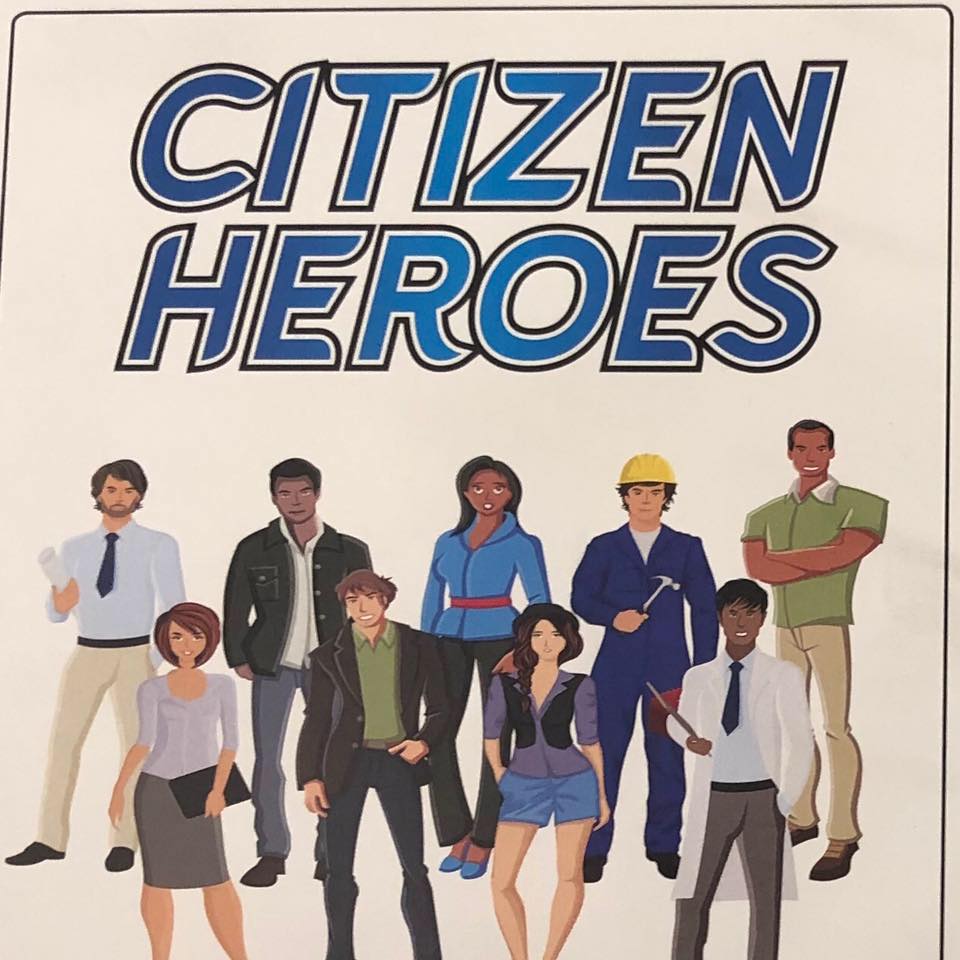
Citizen Heroes

Oregon State Legislature sent this bulletin Wednesday, November 8, 2017 by devadmin

This week we mourn alongside the community of Sutherland Springs, in Texas. This past Sunday, in a Baptist Church – 26 Christian men, women and children were senselessly murdered. My prayers are with those dealing with this horror and the loss of their loved ones, while my admonitions apply to everyone

A week earlier, we read stories of people randomly killed while on a popular bike-only path in lower Manhattan. The terrorist murderer drove a rented truck for nearly a mile down the path in the shadow of the World Trade Center, shouting, “Allahu Akbar.” In New York, the Islamic Terrorist was stopped by police as he was fleeing on foot.

However, in Texas, a brave, quick-thinking, law-abiding gun owner jumped up to save lives in his own neighborhood.

Stephen Willeford quickly rose grabbed his firearm and engaged the murderous assailant who was shooting and killing Christians while they attended a Sunday morning church.

Stephen Willeford, is not a police officer. He is not a Seal Team 6 member with advanced weapons training and skills. He is a plumber who knows how to shoot well enough to injure the killer, even though the fiend was wearing body armor.

When the killer fled the scene, at high speed, a second citizen, a rodeo bull-rider, named Johnnie Langendorf, picked up Willeford and the two of them gave chase.

These two average citizens kept the 911 dispatch officers informed as they hit speeds of 95 miles an hour.

Eventually, they directed deputies to the place where the killer had finally crashed his escape vehicle.

In a news interview, Johnnie stated that it was approximately 5 minutes before the police arrived on the scene. While awaiting the arrival of law-enforcement Willeford had his firearm trained on the killer until the police arrived.

Stephen & Johnnie are the heroes in this tragedy. These two citizen heroes saved lives, of that there can be no question.

But you know what else? — Stephen Willeford, the plumber, was also an NRA member.

He’s a card-carrying member of the NRA, while the murderer was not. Imagine that!?

So, a man who obtained a gun illegally and was not a member of the NRA attacked a church full of Christians and was stopped by an NRA trained citizen using his own personal firearm, for its legitimate purpose –– stopping evil.

This is the good-guy-with-a-gun scenario.

A trained, certified, legal gun owner intervening against a bad guy who illegally obtained a weapon he is not permitted, by gun laws, to have, or own.

It seems obvious that when a bad guy with a gun shows up the answer is always a good guy with a gun (whether that good guy is an officer of the law or a private citizen makes little difference.) The point is good guys with firearms are needed to stop bad guys with firearms.

Thankfully, two good guys showed up yesterday in Sutherland Springs.

The background check system (NICS) failed, because somewhere, somehow military records and court martial information never made it into the NICS. Even if the information had been placed into the NCIS in a timely and efficient manner, there is still no guarantee that some other avenue of illegal firearm trade wouldn’t have provided the means for the murderous ends that the perpetrator wished on these Christian Brethren.

Our 2nd Amendment rights must be protected and preserved to combat evil intentions. We must not make it harder for good people like Stephen Willeford to keep and bear arms.

Here in Oregon, we must be careful because the totalitarians in our midst will launch a full-scale gun control effort because of this tragic mass murder of 26 Americans who were enjoying church last Sunday.

In truth, our government ought to be encouraging every able-bodied citizen to not only own weapons, but be skilled and prepared in using them! In the old days, this was the case.

How many of you can remember attending classes for shooting sports on your high school campus? How many of you had your rifle or firearm in your car or hanging from the back window of your pick-up truck while you went to class?

Our American heritage as documented in our Constitution’s Second Amendment did not spring into existence from another galaxy. It has a long history, founded in natural law, experience and philosophy. Across the old and new worlds, the notion of an armed populace as a means of securing human freedom was well documented in historical fact and legal tradition.

Many of our nation’s Founders were well studied in legal tradition and most of them would have read William Blackstone’s Commentaries on the Laws of England (1765–1769). Blackstone’s first volume elaborates on the three grand, absolute rights. First, every human’s right to life and personal security. Second, an inherent right which consists of the power to act as each one thinks fit – personal liberty. The third grand right is the “sacred and inviolable rights of private property,” the ability to own and use private property for one’s own purposes.

Blackstone covers several means of securing and protecting these rights, noting, “The fifth and last auxiliary right of the subject, … is that of having arms for their defense, suitable to their condition and degree, and such as are allowed by law.”

In closing, historical experience tells us that, “when the sanctions of society and laws are found insufficient to restrain the violence of oppression,” our natural rights for freedom and self-preservation cannot be denied. These basic rights belong to everyday, average citizens. Citizens just like Stephen, Johnnie, you and I.

Remember, if we don’t stand for rural Oregon values and common-sense – No one will!

Regards,

Dennis Linthicum
Oregon State Senate 28

Smoking Marshmallows

Oregon State Legislature sent this bulletin Wednesday, November 8, 2017 by devadmin

When you think about Thanksgiving, what is the first thing that enters your mind?

For most people, it is probably some sort of food – moist turkey breast, buttery mashed potatoes, brown sugar-glazed sweet potatoes (you know… with smoking marshmallows on top,) or pumpkin pie with a dollop of whipped cream.

Or, you might have thoughts about family or friends that you haven’t seen for a long time, how to decorate the house, or how to get where you’re going without getting stuck in traffic.

Once Thanksgiving Day is here and family and friends begin to arrive, then, there will be conversations, topics of discussion, stories to share and catching up to do.

However, I’ll guess that too few of us have our immediate thoughts turn toward being thankful.

Being thankful should be an all-consuming attitude, but it rarely is. Our lives are too busy for that. And, there is so much work to be done. We get tangled in the tyranny of the urgent while ignoring the simple things that fill our days and give purpose to our lives.

A thankful attitude begins with our own humble recognition of where we came from and what our short-comings might be. During moments of reflection, thankfulness shows up as the genuine respect and heartfelt gratitude for those who have impacted our lives.

While we are thankful for the material things we possess we should be most thankful for the people and the intertwining relationships that they bring into our lives.  Although we might say, “I’m thankful for my car,” what we mean is, “I’m thankful to those who purchased, repaired, provided for, or loaned me the car that I drive.” This is true even if you bought and paid for your own car, because you are employed by someone (even yourself), you provide for your customers who purchase the goods or services that you supply. They, in turn, reward your life with the results from their endeavors.

In Johannes Althusius’ famous treatise of 1614, Politica, Althusius describes his understanding of the community as a harmonious ordering of natural associations. Certainly, the family comes first in this community, but there is a host of dependent associations that can’t be overlooked. He identifies God as the first cause of all our relationships and the family as the most natural and important of all human associations. Any other associations or unions grow from these first relationships. He writes,

“Truly, in living this life no man is self-sufficient, or adequately endowed by nature. For when he is born, destitute of all help, naked and defenseless, as if having lost all his goods in a shipwreck, he is cast forth into the hardships of this life, not able by his own efforts to reach a maternal breast, nor to endure the harshness of his condition, nor to move himself from the place where he was cast forth. By his weeping and tears, he can initiate nothing except the most miserable life, a very certain sign of pressing and immediate misfortune.”

Althusius continues,

“Bereft of all counsel and aid, for which nevertheless he is then in greatest need, he is unable to help himself without the intervention and assistance of another. Even if he is well nourished in body, he cannot show forth the light of reason. Nor in his adulthood is he able to obtain in and by himself those outward goods he needs for a comfortable and holy life, or to provide by his own energies all the requirements of life. The energies and industry of many men are expended to procure and supply these things.”

It is no accident that this continent’s first settlers joined together with their immediate community to offer thoughts of thanksgiving to their God, their families, their friends, co-workers, and associates. These celebrations of old are simply the natural outgrowth of a moment of common reflection. Any reasonable assessment of our own skills, abilities, and habits would lead each of us to a thankful understanding for those who daily intervene in our lives.

This is a small variation of the circle of life, where each person voluntarily contributes to the health and well-being of the community through open and free access to the marketplace.

Adam Smith described this in his book, the Wealth of Nations, (1776). Smith mentions the useful efforts of workmen and women in the marketplace. He then jolts us with the realization that the market place does not need altruistic motives to meet the needs of the community. Smith’s narrative explains that it is not from sheer benevolence that the butcher, brewer or baker provides us with our steak, beer and bread. But, rather, they provide these services from regard for their own family’s interests. Their goods and services are needed and enjoyed by the community and in return, these entrepreneurs receive monies to supply their own family’s needs.

In one of President Abraham Lincoln’s Proclamations for Thanksgiving, he states,

“The year that is drawing towards its close has been filled with the blessings of fruitful fields and healthful skies. To these bounties, which are so constantly enjoyed that we are prone to forget the source from which they come, others have been added, which are of so extraordinary a nature, that they cannot fail to penetrate and soften even the heart which is habitually insensible to the ever-watchful providence of Almighty God.”

I hope this year, you too, get the opportunity to reflect and share in a bountiful Thanksgiving celebration.

Remember, if we don’t stand for rural Oregon values, common-sense and our great American Traditions – No one will!

Dennis Linthicum
Oregon State Senate 28

Fraught With Danger

Oregon State Legislature sent this bulletin Tuesday, July 4, 2017 by devadmin

Independence Day Guest Commentary
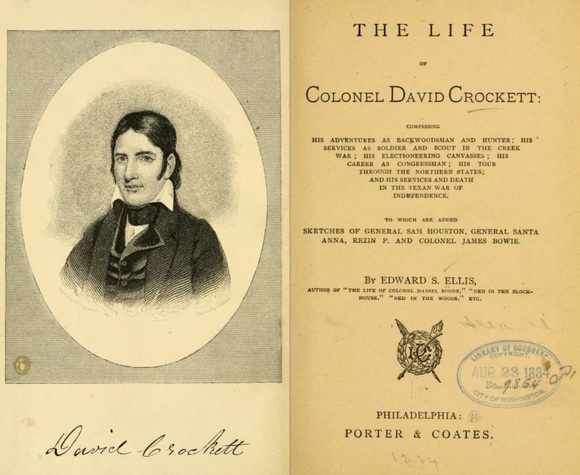
Colonel David Crockett

 Crockett was first elected to the US House of Representatives in 1825.


One day in the House of Representatives a bill was taken up appropriating money for the benefit of a widow of a distinguished naval officer. Several beautiful speeches had been made in its support.

The speaker was just about to put the question when Crockett arose:

 “Mr. Speaker — I have as much respect for the memory of the deceased, and as much sympathy for the suffering of the living, if there be, as any man in this House, but we must not permit our respect for the dead or our sympathy for part of the living to lead us into an act of injustice to the balance of the living. I will not go into an argument to prove that Congress has not the power to appropriate this money as an act of charity. Every member on this floor knows it.

 “We have the right as individuals, to give away as much of our own money as we please in charity; but as members of Congress we have no right to appropriate a dollar of the public money. Some eloquent appeals have been made to us upon the ground that it is a debt due the deceased. Mr. Speaker, the deceased lived long after the close of the war; he was in office to the day of his death, and I ever heard that the government was in arrears to him.

 “Every man in this House knows it is not a debt. We cannot without the grossest corruption, appropriate this money as the payment of a debt. We have not the semblance of authority to appropriate it as charity. Mr. Speaker, I have said we have the right to give as much money of our own as we please. I am the poorest man on this floor. I cannot vote for this bill, but I will give one week’s pay to the object, and if every member of Congress will do the same, it will amount to more than the bill asks.
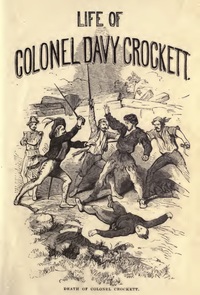
He took his seat. Nobody replied. The bill was put upon its passage, and, instead of passing unanimously, as was generally supposed, and as, no doubt, it would, but for that speech, it received but few votes, and, of course, was lost. Later, when asked by a friend why he had opposed the appropriation, Crockett gave this explanation: “Several years ago I was one evening standing on the steps of the Capitol with some members of Congress, when our attention was attracted by a great light over in Georgetown. It was evidently a large fire.

We jumped into a hack and drove over as fast as we could. In spite of all that could be done, many houses were burned and many families made houseless, and besides, some of them had lost all but the clothes they had on.

 “The weather was very cold, and when I saw so many children suffering, I felt that something ought to be done for them. The next morning a bill was introduced appropriating $20,000 for their relief. We put aside all other business and rushed it through as soon as it could be done.

 “The next summer, when it began to be time to think about election, I concluded I would take a scout around among the boys of my district. I had no opposition there but, as the election was some time off, I did not know what might turn up. When riding one day in a part of my district in which I was more of a stranger than any other, I saw a man in a field plowing and coming toward the road. I gauged my gait so that we should meet as he came up, I spoke to the man. He replied politely, but as I thought, rather coldly.

 “I began: ‘Well friend, I am one of those unfortunate beings called candidates and –’

 “‘Yes I know you; you are Colonel Crockett. I have seen you once before, and voted for you the last time you were elected. I suppose you are out electioneering now, but you had better not waste your time or mine, I shall not vote for you again.’

 “This was a sockdologer… I begged him tell me what was the matter.

 “‘Well Colonel, it is hardly worthwhile to waste time or words upon it. I do not see how it can be mended, but you gave a vote last winter which shows that either you have not capacity to understand the Constitution, or that you are wanting in the honesty and firmness to be guided by it. In either case you are not the man to represent me. But I beg your pardon for expressing it that way. I did not intend to avail myself of the privilege of the constituent to speak plainly to a candidate for the purpose of insulting you or wounding you.

 “‘I intend by it only to say that your understanding of the constitution is very different from mine; and I will say to you what but for my rudeness, I should not have said, that I believe you to be honest.’

 “‘But an understanding of the Constitution different from mine I cannot overlook, because the Constitution, to be worth anything, must be held sacred, and rigidly observed in all its provisions. The man who wields power and misinterprets it is dangerous.’
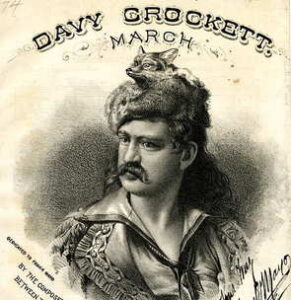
The Constitution, to be worth anything, must be held sacred, and rigidly observed in all its provisions. The man who wields power and misinterprets it is dangerous. “‘I admit the truth of all you say, but there must be some mistake. Though I live in the backwoods and seldom go from home, I take the papers from Washington and read very carefully all the proceedings of Congress. My papers say you voted for a bill to appropriate $20,000 to some sufferers by fire in Georgetown. Is that true?’

 “‘Well my friend; I may as well own up. You have got me there. But certainly nobody will complain that a great and rich country like ours should give the insignificant sum of $20,000 to relieve its suffering women and children, particularly with a full and overflowing treasury, and I am sure, if you had been there, you would have done just the same as I did.’

 “‘It is not the amount, Colonel, that I complain of; it is the principle. In the first place, the government ought to have in the Treasury no more than enough for its legitimate purposes. But that has nothing with the question. The power of collecting and disbursing money at pleasure is the most dangerous power that can be entrusted to man, particularly under our system of collecting revenue by a tariff, which reaches every man in the country, no matter how poor he may be, and the poorer he is the more he pays in proportion to his means.

 “‘What is worse, it presses upon him without his knowledge where the weight centers, for there is not a man in the United States who can ever guess how much he pays to the government. So you see, that while you are contributing to relieve one, you are drawing it from thousands who are even worse off than he.
“‘If you had the right to give anything, the amount was simply a matter of discretion with you, and you had as much right to give $20,000,000 as $20,000. If you have the right to give at all; and as the Constitution neither defines charity nor stipulates the amount, you are at liberty to give to any and everything which you may believe, or profess to believe, is a charity and to any amount you may think proper. You will very easily perceive what a wide door this would open for fraud and corruption and favoritism, on the one hand, and for robbing the people on the other. No, Colonel, Congress has no right to give charity.

“‘Individual members may give as much of their own money as they please, but they have no right to touch a dollar of the public money for that purpose. If twice as many houses had been burned in this country as in Georgetown, neither you nor any other member of Congress would have thought of appropriating a dollar for our relief. There are about two hundred and forty members of Congress. If they had shown their sympathy for the sufferers by contributing each one week’s pay, it would have made over $13,000. There are plenty of wealthy men around Washington who could have given $20,000 without depriving themselves of even a luxury of life.

 “‘The congressmen chose to keep their own money, which, if reports be true, some of them spend not very creditably; and the people about Washington, no doubt, applauded you for relieving them from necessity of giving what was not yours to give. The people have delegated to Congress, by the Constitution, the power to do certain things. To do these, it is authorized to collect and pay moneys, and for nothing else. Everything beyond this is usurpation, and a violation of the Constitution.

 “‘So you see, Colonel, you have violated the Constitution in what I consider a vital point. It is a precedent fraught with danger to the country, for when Congress once begins to stretch its power beyond the limits of the Constitution, there is no limit to it, and no security for the people. I have no doubt you acted honestly, but that does not make it any better, except as far as you are personally concerned, and you see that I cannot vote for you.’

 “I tell you I felt streaked. I saw if I should have opposition, and this man should go to talking and in that district I was a gone fawn-skin. I could not answer him, and the fact is, I was so fully convinced that he was right, I did not want to. But I must satisfy him, and I said to him:

“‘Well, my friend, you hit the nail upon the head when you said I had not sense enough to understand the Constitution. I intended to be guided by it, and thought I had studied it fully. I have heard many speeches in Congress about the powers of Congress, but what you have said here at your plow has got more hard, sound sense in it than all the fine speeches I ever heard. If I had ever taken the view of it that you have, I would have put my head into the fire before I would have given that vote; and if you will forgive me and vote for me again, if I ever vote for another unconstitutional law I wish I may be shot.’ “He laughingly replied; ‘Yes, Colonel, you have sworn to that once before, but I will trust you again upon one condition.

‘You are convinced that your vote was wrong. Your acknowledgment of it will do more good than beating you for it. If, as you go around the district, you will tell people about this vote, and that you are satisfied it was wrong, I will not only vote for you, but will do what I can to keep down opposition, and perhaps, I may exert some little influence in that way.’

 “If I don’t, said I, ‘I wish I may be shot; and to convince you that I am in earnest in what I say I will come back this way in a week or ten days, and if you will get up a gathering of people, I will make a speech to them. Get up a barbecue, and I will pay for it.’

 “‘No, Colonel, we are not rich people in this section but we have plenty of provisions to contribute for a barbecue, and some to spare for those who have none. The push of crops will be over in a few days, and we can then afford a day for a barbecue. This Thursday; I will see to getting it up on Saturday week. Come to my house on Friday, and we will go together, and I promise you a very respectable crowd to see and hear you.’

 “‘Well I will be here. But one thing more before I say good-bye. I must know your name.’

 “‘My name is Bunce.’

 “‘Not Horatio Bunce?’

 “‘Yes.’

 “‘Well, Mr. Bunce, I never saw you before, though you say you have seen me, but I know you very well. I am glad I have met you, and very proud that I may hope to have you for my friend.’

 “It was one of the luckiest hits of my life that I met him. He mingled but little with the public, but was widely known for his remarkable intelligence, and for a heart brim-full and running over with kindness and benevolence, which showed themselves not only in words but in acts.

He was the oracle of the whole country around him, and his fame had extended far beyond the circle of his immediate acquaintance. Though I had never met him, before, I had heard much of him, and but for this meeting it is very likely I should have had opposition, and had been beaten. One thing is very certain, no man could now stand up in that district under such a vote.
 “At the appointed time I was at his house, having told our conversation to every crowd I had met, and to every man I stayed all night with, and I found that it gave the people an interest and confidence in me stronger than I had ever seen manifested before.

 “Though I was considerably fatigued when I reached his house, and, under ordinary circumstances, should have gone early to bed, I kept him up until midnight talking about the principles and affairs of government, and got more real, true knowledge of them than I had got all my life before.

 “I have known and seen much of him since, for I respect him — no, that is not the word — I reverence and love him more than any living man, and I go to see him two or three times every year; and I will tell you, sir, if every one who professes to be a Christian lived and acted and enjoyed it as he does, the religion of Christ would take the world by storm

If every one who professes to be a Christian lived and acted and enjoyed it as he does, the religion of Christ would take the world by storm.

 “But to return to my story. The next morning we went to the barbecue and, to my surprise, found about a thousand men there. I met a good many whom I had not known before, and they and my friend introduced me around until I had got pretty well acquainted — at least, they all knew me.

 “In due time notice was given that I would speak to them. They gathered up around a stand that had been erected. I opened my speech by saying:

 “‘Fellow-citizens — I present myself before you today feeling like a new man. My eyes have lately been opened to truths which ignorance or prejudice or both, had heretofore hidden from my view. I feel that I can today offer you the ability to render you more valuable service than I have ever been able to render before. I am here today more for the purpose of acknowledging my error than to seek your votes. That I should make this acknowledgment is due to myself as well as to you. Whether you will vote for me is a matter for your consideration only.’

 “I went on to tell them about the fire and my vote for the appropriation and then told them why I was satisfied it was wrong. I closed by saying:

 “‘And now, fellow-citizens, it remains only for me to tell you that the most of the speech you have listened to with so much interest was simply a repetition of the arguments by which your neighbor, Mr. Bunce, convinced me of my error.

 “‘It is the best speech I ever made in my life, but he is entitled to the credit for it. And now I hope he is satisfied with his convert and that he will get up here and tell you so.’

 “He came up to the stand and said:

 “‘Fellow-citizens — it affords me great pleasure to comply with the request of Colonel Crockett. I have always considered him a thoroughly honest man, and I am satisfied that he will faithfully perform all that he has promised you today.’

 “He went down, and there went up from that crowd such a shout for Davy Crockett as his name never called forth before.

 “I am not much given to tears, but I was taken with a choking then and felt some big drops rolling down my cheeks. And I tell you now that the remembrance of those few words spoken by such a man, and the honest, hearty shout they produced, is worth more to me than all the honors I have received and all the reputation I have ever made, or ever shall make, as a member of Congress.

 “Now, sir,” concluded Crockett, “you know why I made that speech yesterday. There is one thing which I will call your attention, you remember that I proposed to give a week’s pay. There are in that House many very wealthy men — men who think nothing of spending a week’s pay, or a dozen of them, for a dinner or a wine party when they have something to accomplish by it. Some of those same men made beautiful speeches upon the great debt of gratitude which the country owed the deceased — a debt which could not be paid by money — and the insignificance and worthlessness of money, particularly so insignificant a sum as $20,000 when weighed against the honor of the nation. Yet not one of them responded to my proposition. Money with them is nothing but trash when it is to come out of the people. But it is the one great thing for which most of them are striving, and many of them sacrifice honor, integrity, and justice to obtain it.”

Regards,

Col. David Crockett

U.S. Representative from Tennessee

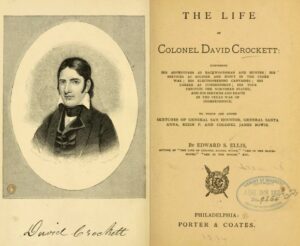
*  Originally published in The Life of Colonel David Crockett by Edward Sylvester Ellis


As you’ve heard before…  “there is nothing new under the sun…”

Celebrate the Liberty of our Independence with courage, wisdom and strength,

because if we don’t stand for rural Oregon values and common-sense –

No One Will

My Best,

Dennis Linthicum
Oregon State Senate 28
Here’s a Fun Challenge…

Oregon State Legislature sent this bulletin Tuesday, July 3, 2018 by devadmin

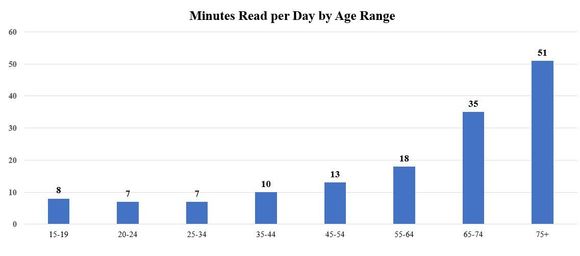
Overall, Americans only spend 17 minutes per day in reading activities. As The Washington Post explains, this number has dropped six minutes since 2004. Broken down by age range, those in the millennial generation read the least, averaging seven minutes a day. Those in the 75 and older age range average 51 minutes per day.

The stats get slightly better when we come to the relaxing/thinking category. On average, Americans spend 22 minutes engaged in such an activity.

Here’s your challenge…  Since today marks the celebration our Nation’s Independence, try giving our Founders’ unanimous declaration a good read. Try reading it to your family…

Scroll

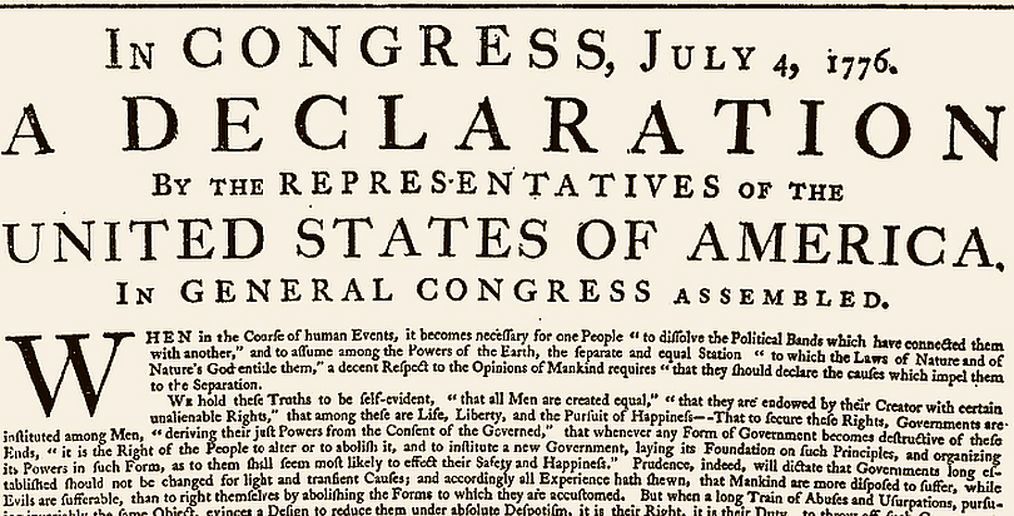
IN CONGRESS, July 4, 1776

The unanimous Declaration of the thirteen united States of America,

When in the Course of human events, it becomes necessary for one people to dissolve the political bands which have connected them with another, and to assume among the powers of the earth, the separate and equal station to which the Laws of Nature and of Nature’s God entitle them, a decent respect to the opinions of mankind requires that they should declare the causes which impel them to the separation.

We hold these truths to be self-evident, that all men are created equal, that they are endowed by their Creator with certain unalienable Rights, that among these are Life, Liberty and the pursuit of Happiness. — That to secure these rights, Governments are instituted among Men, deriving their just powers from the consent of the governed, — That whenever any Form of Government becomes destructive of these ends, it is the Right of the People to alter or to abolish it, and to institute new Government, laying its foundation on such principles and organizing its powers in such form, as to them shall seem most likely to effect their Safety and Happiness. Prudence, indeed, will dictate that Governments long established should not be changed for light and transient causes; and accordingly all experience hath shewn, that mankind are more disposed to suffer, while evils are sufferable, than to right themselves by abolishing the forms to which they are accustomed. But when a long train of abuses and usurpations, pursuing invariably the same Object evinces a design to reduce them under absolute Despotism, it is their right, it is their duty, to throw off such Government, and to provide new Guards for their future security. — Such has been the patient sufferance of these Colonies; and such is now the necessity which constrains them to alter their former Systems of Government. The history of the present King of Great Britain is a history of repeated injuries and usurpations, all having in direct object the establishment of an absolute Tyranny over these States. To prove this, let Facts be submitted to a candid world.

He has refused his Assent to Laws, the most wholesome and necessary for the public good.

He has forbidden his Governors to pass Laws of immediate and pressing importance, unless suspended in their operation till his Assent should be obtained; and when so suspended, he has utterly neglected to attend to them.

He has refused to pass other Laws for the accommodation of large districts of people, unless those people would relinquish the right of Representation in the Legislature, a right inestimable to them and formidable to tyrants only.

He has called together legislative bodies at places unusual, uncomfortable, and distant from the depository of their public Records, for the sole purpose of fatiguing them into compliance with his measures.

He has dissolved Representative Houses repeatedly, for opposing with manly firmness his invasions on the rights of the people.

He has refused for a long time, after such dissolutions, to cause others to be elected; whereby the Legislative powers, incapable of Annihilation, have returned to the People at large for their exercise; the State remaining in the mean time exposed to all the dangers of invasion from without, and convulsions within.

He has endeavoured to prevent the population of these States; for that purpose obstructing the Laws for Naturalization of Foreigners; refusing to pass others to encourage their migrations hither, and raising the conditions of new Appropriations of Lands.

He has obstructed the Administration of Justice, by refusing his Assent to Laws for establishing Judiciary powers.

He has made Judges dependent on his Will alone, for the tenure of their offices, and the amount and payment of their salaries.

He has erected a multitude of New Offices, and sent hither swarms of Officers to harrass our people, and eat out their substance.

He has kept among us, in times of peace, Standing Armies without the Consent of our legislatures. He has affected to render the Military independent of and superior to the Civil power.

He has combined with others to subject us to a jurisdiction foreign to our constitution, and unacknowledged by our laws; giving his Assent to their Acts of pretended Legislation:

For Quartering large bodies of armed troops among us:

For protecting them, by a mock Trial, from punishment for any Murders which they should commit on the Inhabitants of these States:

For cutting off our Trade with all parts of the world:

For imposing Taxes on us without our Consent:

For depriving us in many cases, of the benefits of Trial by Jury: For transporting us beyond Seas to be tried for pretended offences:

For abolishing the free System of English Laws in a neighbouring Province, establishing therein an Arbitrary government, and enlarging its Boundaries so as to render it at once an example and fit instrument for introducing the same absolute rule into these Colonies:

For taking away our Charters, abolishing our most valuable Laws, and altering fundamentally the Forms of our Governments:

For suspending our own Legislatures, and declaring themselves invested with power to legislate for us in all cases whatsoever.

He has abdicated Government here, by declaring us out of his Protection and waging War against us.

He has plundered our seas, ravaged our Coasts, burnt our towns, and destroyed the lives of our people.

He is at this time transporting large Armies of foreign Mercenaries to compleat the works of death, desolation and tyranny, already begun with circumstances of Cruelty & perfidy scarcely paralleled in the most barbarous ages, and totally unworthy the Head of a civilized nation.

He has constrained our fellow Citizens taken Captive on the high Seas to bear Arms against their Country, to become the executioners of their friends and Brethren, or to fall themselves by their Hands.

He has excited domestic insurrections amongst us, and has endeavoured to bring on the inhabitants of our frontiers, the merciless Indian Savages, whose known rule of warfare, is an undistinguished destruction of all ages, sexes and conditions.

In every stage of these Oppressions We have Petitioned for Redress in the most humble terms: Our repeated Petitions have been answered only by repeated injury. A Prince whose character is thus marked by every act which may define a Tyrant, is unfit to be the ruler of a free people.

Nor have We been wanting in attentions to our British brethren. We have warned them from time to time of attempts by their legislature to extend an unwarrantable jurisdiction over us. We have reminded them of the circumstances of our emigration and settlement here. We have appealed to their native justice and magnanimity, and we have conjured them by the ties of our common kindred to disavow these usurpations, which, would inevitably interrupt our connections and correspondence. They too have been deaf to the voice of justice and of consanguinity. We must, therefore, acquiesce in the necessity, which denounces our Separation, and hold them, as we hold the rest of mankind, Enemies in War, in Peace Friends.

We, therefore, the Representatives of the united States of America, in General Congress, Assembled, appealing to the Supreme Judge of the world for the rectitude of our intentions, do, in the Name, and by Authority of the good People of these Colonies, solemnly publish and declare, That these United Colonies are, and of Right ought to be Free and Independent States; that they are Absolved from all Allegiance to the British Crown, and that all political connection between them and the State of Great Britain, is and ought to be totally dissolved; and that as Free and Independent States, they have full Power to levy War, conclude Peace, contract Alliances, establish Commerce, and to do all other Acts and Things which Independent States may of right do. And for the support of this Declaration, with a firm reliance on the protection of divine Providence, we mutually pledge to each other our Lives, our Fortunes and our sacred Honor.


Wasn’t that fun and inspiring?

Remember, If we don’t stand for rural Oregon values and common-sense – No one will!

Dennis Linthicum
Oregon State Senate 28

Science, Common-sense and Reasonableness.

Oregon State Legislature sent this bulletin Monday, June 11, 2018 by devadmin

In 1862 the Homestead Act was passed by Congress. This was the first time the United States government made free land available to western settlers. In that same year a Bureau of Agriculture was created.

There is a lesson here – if you are ever tempted to accept a gift from the government, know that what the government gives one day, can be taken the next.

Throughout history whenever the power and economic resources of the government are pitched against the people – the people lose. Not least because governments use revenue collected from taxes to fund the very policies that are becoming more and more burdensome. This is especially true in fields of agriculture, food production, natural resource extraction, high-end precision technologies and material manufacturing.

Government authority becomes concentrated in structures of command and control because government is duty-bound to regulate existing environments and processes. Government organizations receive their regulatory mandates through a single method – political power. Therefore, political factions, with their rival interpretations of law and jurisprudence, are engaged in constant struggle and turmoil. This is the nature of government.

Legislators, like kids with a shoebox full of Lego’s, get to guide and organize the tools of government to create and implement policies that will achieve their goals.

James Madison, wrote in Federalist No. 51 (1788), “If men were angels, no government would be necessary. If angels were to govern men, neither external nor internal controls on government would be necessary. In framing a government which is to be administered by men over men, the great difficulty lies in this: you must first enable the government to control the governed; and in the next place, oblige it to control itself.”

Government organizations, even those filled with good people and great administrators, are subject to Madison’s observation. No angels create, manage or administer government programs.

The tools of administration, on the surface appear simple, convenient and straight-forward. Yet, they form a complicated, multi-faceted, unavoidable and intricately woven snare. There is only one way to successfully navigate through the modern labyrinth. The path is actually the same for rule administrators (enforcers) or rule followers. For all participants, successfully navigating the maze only requires rejecting one’s common-sense and reasonableness. Then, with those two items out of the way, the rest is easy.

The organizations wielding this power can’t even be charged with illegal activity, because their activities are sanctified in law. Aside from civil lawsuits which help to corral regulators back into their legally defined roles or correct administrative blunders, how does one “oblige government to control itself?” Or, how do you stop a freight-train?

A recent Wall Street Journal (WSJ) article noted, “Barack Obama’s Environmental Protection Agency jammed through an average of 565 new rules each year during the Obama Presidency, imposing the highest regulatory costs of any agency.” This vast expansion of the sphere of government is clearly beyond the traditional areas of responsibility laid out by our nation’s founders.

Obama’s EPA illustrates that regulatory power is really political power. The regulations were engineered for political usefulness even though they were scientifically imprecise, economically facetious and morally vacuous.

Under the surface, this is really a contest of ideas. The conflict is between support for bigger, larger, more controlling government, or the establishment and preservation of a society of free individuals complete with their unalienable rights.

Newsweek Cover

However, as the cover of Newsweek magazine proclaimed, back in 2009, “We are all socialists now.” The government we experience today is a reflection of the progressive left’s ideological predisposition which has become the dominant force of government. This vision of a centrally-managed utopia, imposed by regulatory mandate, regardless of science, common-sense or reasonableness is pervasive in Oregon policy.

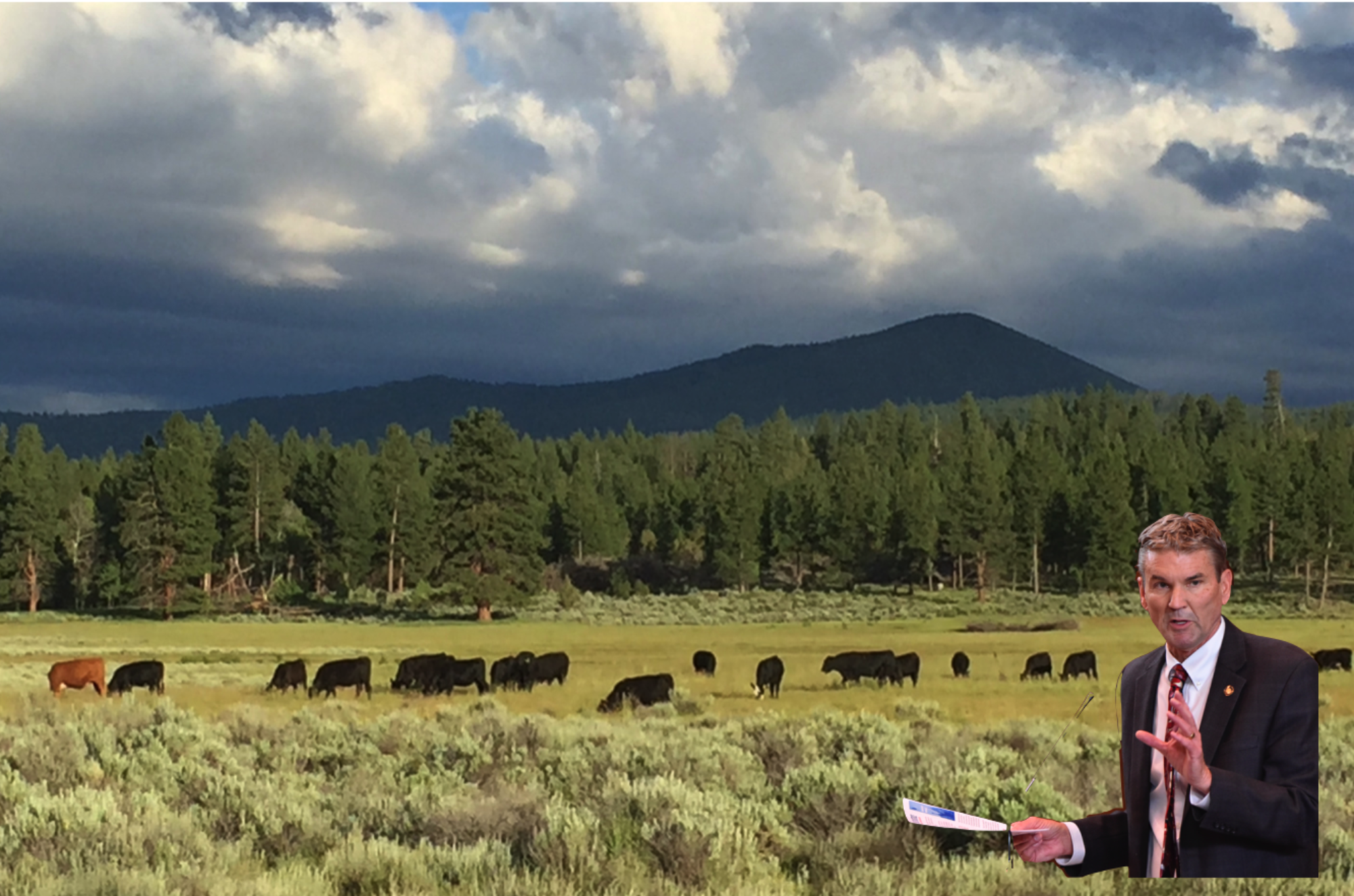
For example, last month, Oregon Water Resources Department (OWRD) shut-down ag-wells that are within 1 mile of the Sprague River. Their stated intention is to increase flow in the Sprague river due to a surface water call by the Klamath Tribes. This Departmental policy initiative will force 140 businesses, families and employees off their land because their groundwater wells were drilled nearly 50 years ago and happen to be within 1 mile of the river.

There is little evidence to justify the Department’s model assertion that groundwater wells negatively impact in-stream surface water. Given the low aquifer transmissivity, varying thicknesses in real-world geologic layers, and varying horizontal hydraulic conductivities this would obviously result in a futile call for water. Following OWRD’s own rules they should be regularly assessing conditions to determine if the call is futile and allow junior water right holders access to their groundwater allotments. Oregon law requires OWRD to demonstrate the use of a well is causing substantial and timely interference with one or more priority water rights before the department can regulate-off any particular well.

Yet, they don’t appear to be following these guidelines – water remains shut-off because of the model’s basic assertions. Aside from irrigation and stock-watering wells, three municipalities in Klamath County are also threatened with regulatory enforcement due to the artificial one-mile proximity range, but not due to substantial and timely interference.

All Oregon water users may expect the Department to employ similar computer modelling technology to force water shut-offs in other areas of the state. Given the complex technical nature of much scientific data, computer models, applications, assumptions and extrapolations, OWRD must address departmental weaknesses in identifying, disclosing, and resolving issues with conflict-of-interest and scientific-integrity, while ensuring the quality of the evidentiary findings used during enforcement actions.

To eliminate these unnecessary and politically contrived water shortages, we need to provide realistic problem-solving leadership and embrace strategies designed to increase water supplies. We should be recharging aquifers and building new water reservoirs and dams. This is especially true if weather patterns lower the water volume stored in our winter snowpack.

The legislature must select projects that yield the best return on investment while taking a hard look at costs, science and improved technology. Oregon’s ample runoff water-flows provide a unique source for water-storage efforts and are the proper way to eliminate water scarcity.

We should promote, not restrict, the ingenious free-market problem solver, the all-around engineer, and the entrepreneurs in our communities. Builders, bakers, family farmers and ranchers all provide the daily necessities of life and these are the hardworking Oregonians that should be our heroes.

Without these realistic, common-sense changes the state’s dysfunctional political culture will savage agriculture, just as it did Oregon’s timber industry, and along with it, Oregon’s overall economy.

Remember, if we don’t stand for rural-Oregon values and common-sense – No one will.

Senator Dennis Linthicum signature

Dennis Linthicum

Oregon State Senate 28